
Please read the introductory page in the Real Botany of Desire for the background to why I’m listing the observed insect favourite flowers that bloom during this month, and which seem to be the most popular with the groups of insects which frequent our garden. This is another month where choosing a top 3 favourite insect friendly flowers is tricky, but my choices for now are Sedum( Hylotelephium) spectabile ‘Autumn Joy’, Devil’s Bit Scabious, Succisa pratensis.
and Dahlia merckii.
As always, many of August’s great insect friendly flowers continue blooming into September, so check the previous month as well.
If reading my introductory page is a click too far, then briefly, there’s a huge issue with the loss of wild flowers as agriculture intensifies and mono-cultures prevail. This impacts all the insects which rely on flowers as food sources. But all flowers aren’t equal in their appeal to insects, or particular groups of insects, (e.g. honey bees, bumblebees, hoverflies, moths, butterflies). Many nursery-bred plants have been designed to be attractive to our senses, not insects. Some flowers are useful as both pollen and nectar sources (P, N) whereas others just seem to provide one of these insect foodstuffs, and I’ll try to include this information with the images. So this simple record is to help gardeners think about this issue, and maybe plant more flowers to help our very diverse native insect groups. I’ve found that many of the best plants seem to be some of our native wildflowers which can in other respects have real garden merit. Equally, there are many plants from the other side of the globe which are preferentially favoured over native flowers at certain times of the year – there is no simple easy guide to their relative appeal. The positive spin-offs from incorporating more insect friendly flowers in our gardens apart from the appeal of seeing the insects themselves will be better pollination of our crops, and more varied wildlife in our gardens, since insects are at the bottom of many animal food chains.
It’s certainly not exhaustive, and if you know other flowers which have equal appeal, which aren’t listed here, do please let me know, and I’ll try them up here as well. This work started a couple of years before my blog began in March 2011, but previous to that I’d produced the UK’s first DVD-ROM guide to Garden Moths ” In A Different Light”. This project attempts to widen that work in a more general way.
September often brings the final crescendo of insect numbers and diversity in our garden, before the falling away as temperatures start to drop heading into autumn and winter. This month nearly always finds the biggest number of butterflies in the garden, and we’ve devoted a specific, slightly more sheltered part of the garden to incorporate lots of butterfly-attracting flowers.
Finally, as I mention elsewhere, the actual number of flowers of a single plant type growing together, and their position in the garden (e.g. sun or shade), can also impact how favoured the flowers are by your garden’s insect population – probably because sun and warmth can affect nectar and pollen production and release.
As a summary of the favourite plants in September 2021, watch the short video clip below:
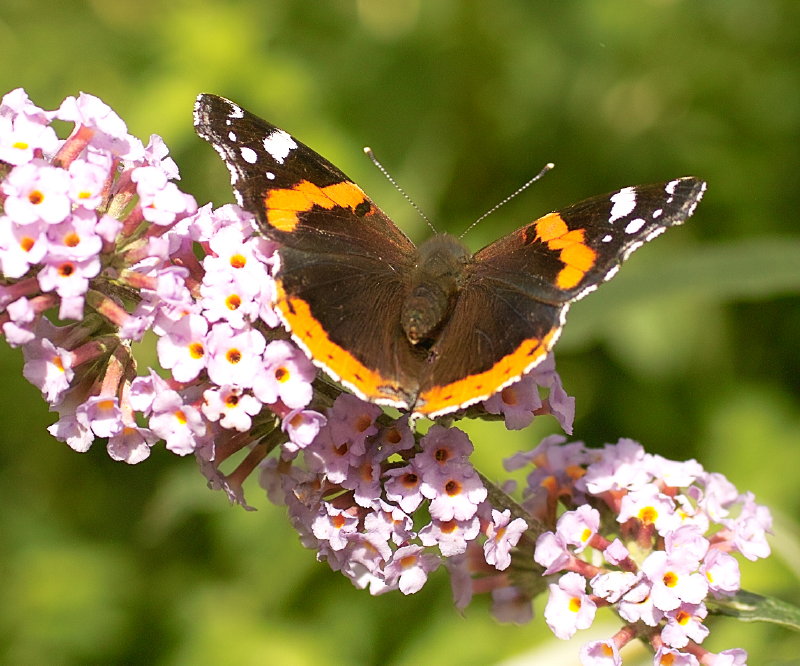
Buddleia davidii, and this is a seedling cultivar which popped up in the garden, forming the mainstay along with golden marjoram and Sedum spectabile of an area of the garden planted up for maximum nectar appeal for the late summer butterflies, which forms the peak of the native butterfly season here. This peak in numbers in upland Carmarthenshire is often later than in other parts of the UK. As well as attracting butterflies, Buddleia flowers are really popular with moths, flies, and some bumblebees. Even honey bees visit the unique Gelli Uchaf form above. Red Admiral, Vanessa atalanta, butterfly pictured.
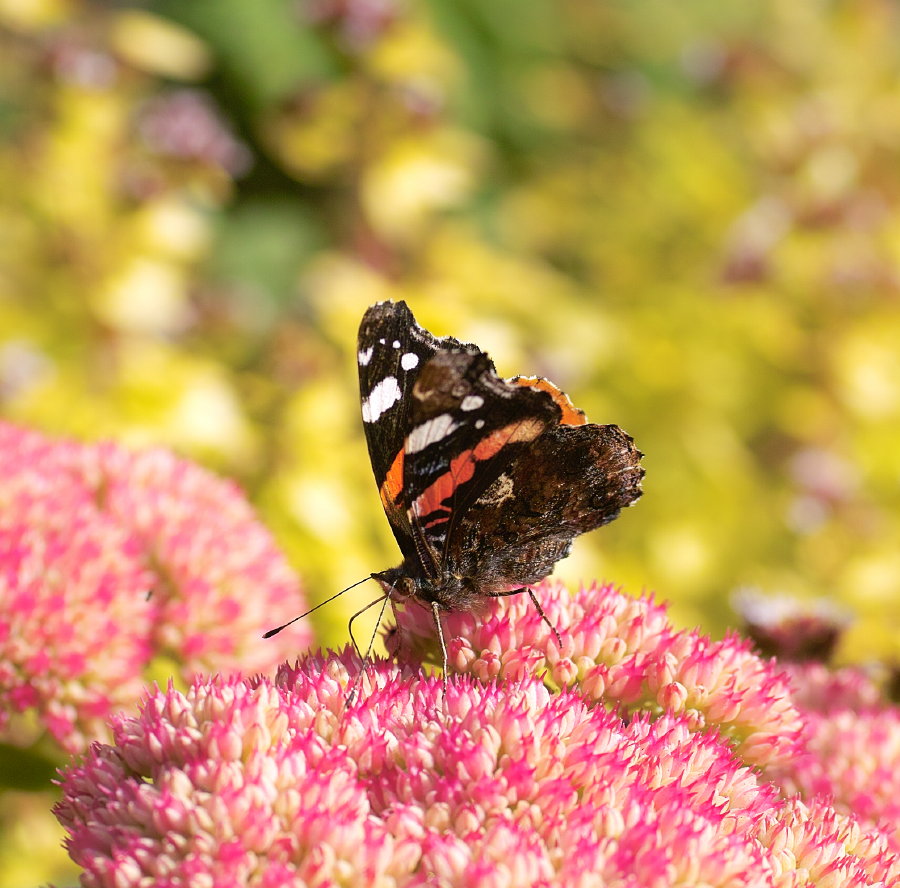
Sedum and golden marjoram in the butterfly garden. Sedum spectabile ‘Autumn Joy’ is briefly THE nectar flower for butterflies in our garden once the Buddleia have finished blooming.
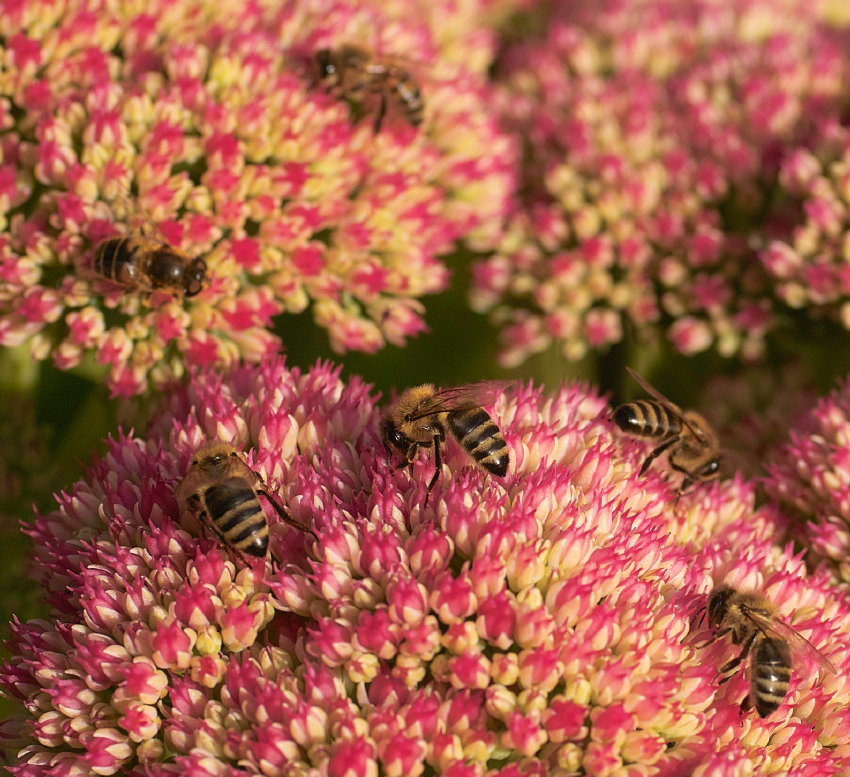
For the first time in 2012, we had one afternoon only in early September, when hundreds of honey bees descend on the Sedum flowers. The wind was blowing in exactly the opposite direction of the nearest known hive, over a mile away, but it was a particularly warm sunny afternoon. Notice no visible pollen on any of these bees, and compare with the photo later on, taken of a honey bee on the same day on a Hydrangea ‘Blue Zorro’. There are certainly cohorts of honey bees which forage for nectar and others for pollen. Sedum, at least at this stage of flowering, seems to be firmly in the nectar source camp.
This event was a trigger for me to begin my journey of exploring, and subsequently building “hives” for several minimal intervention honey bee colonies, which now seem to thrive on our property, and which I’ve written about here.
.
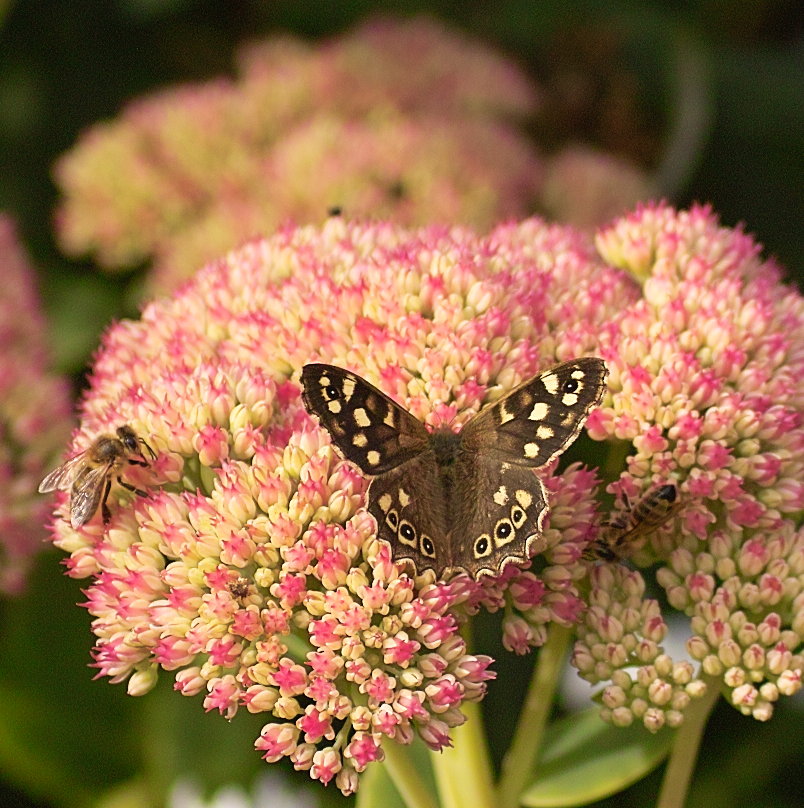
Speckled Wood butterfly, Pararge aegeria, and 2 honey bees on Sedum spectabile.
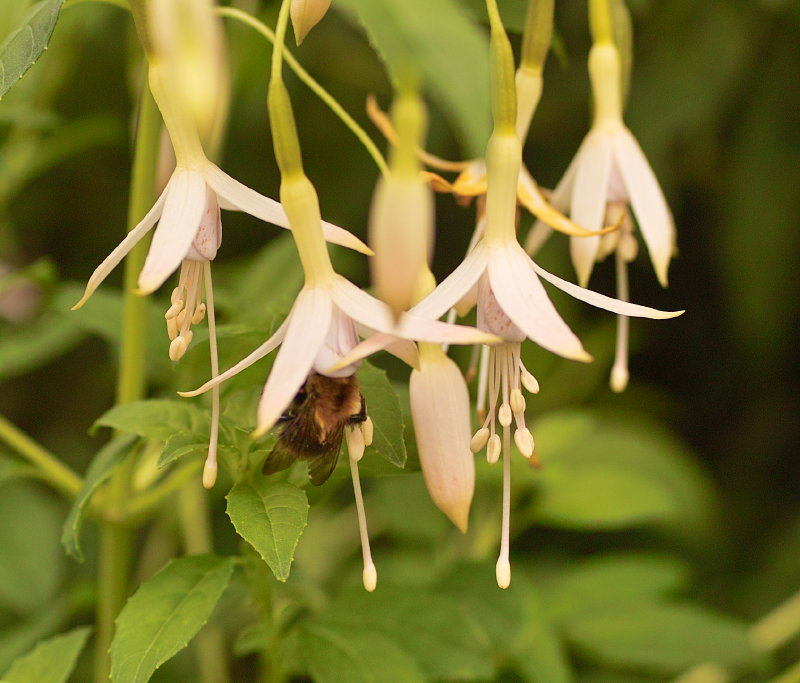
Fuchsia magellanica ‘Alba’ is one of a couple of hardy fuchsias we grow which are perennials surviving down to minus 17 degrees C. It’s now been superseded around the garden with F.m ‘Duchy seedling’ which we’ve found to be more floriferous, reliable and appealing to honey bees and bumblebees. They are sometimes visited by bumblebees. Another late-season plant which keeps flowering up to first frosts.

Anaphalis margaritacea ‘New Snow’ has attractive silver foliage, and produces these small flowers for a shortish period in September, but as you can see they are popular with moths and flies. Not reliable up here though!

Verbena rigida is a visually great late-season flower with us. Less tall than V. bonariensis, it flowers just as prolifically and like V. bonariensis is also attractive as a nectar source for butterflies, moths and some flies. It has proved to be hardy down to minus 17 degrees C as well, and flowers up to the first frosts. .
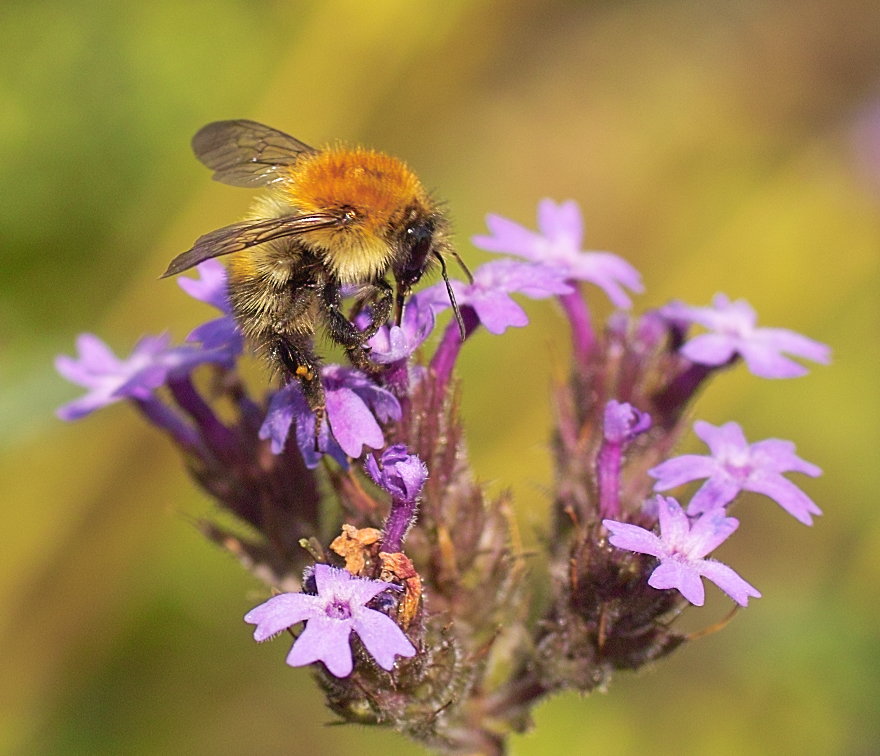
Verbena rigida is also valued as a nectar source by several bumblebee species.
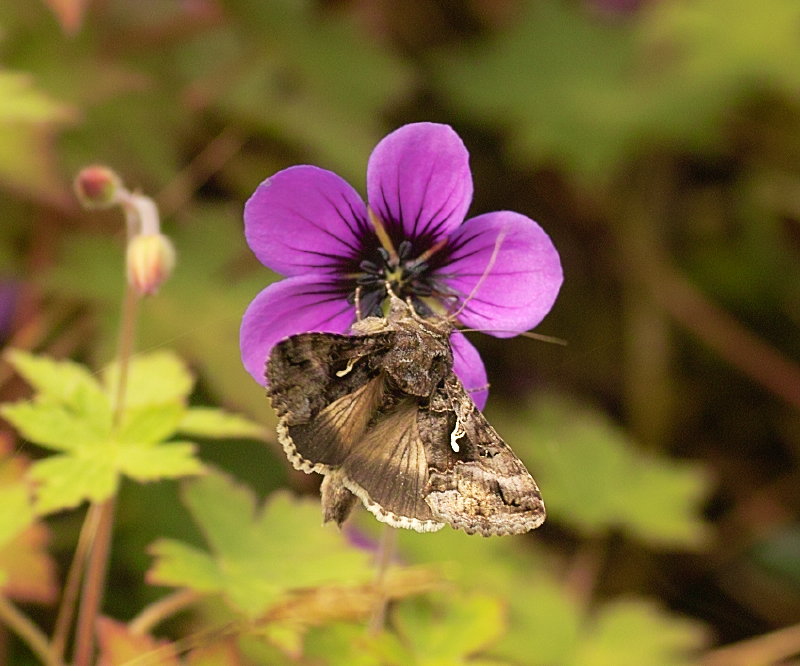
Geranium procurrens, a trailing Himalayan late season flowering species is one of the most favoured G. for insects – moths, flies, bumblebees, butterflies and honey bees and mining bees. This is a Silver Y moth, Autographa gamma, feeding during the daytime. It will keep flowering until frosts or early December, so is a great late season nectar and pollen source.
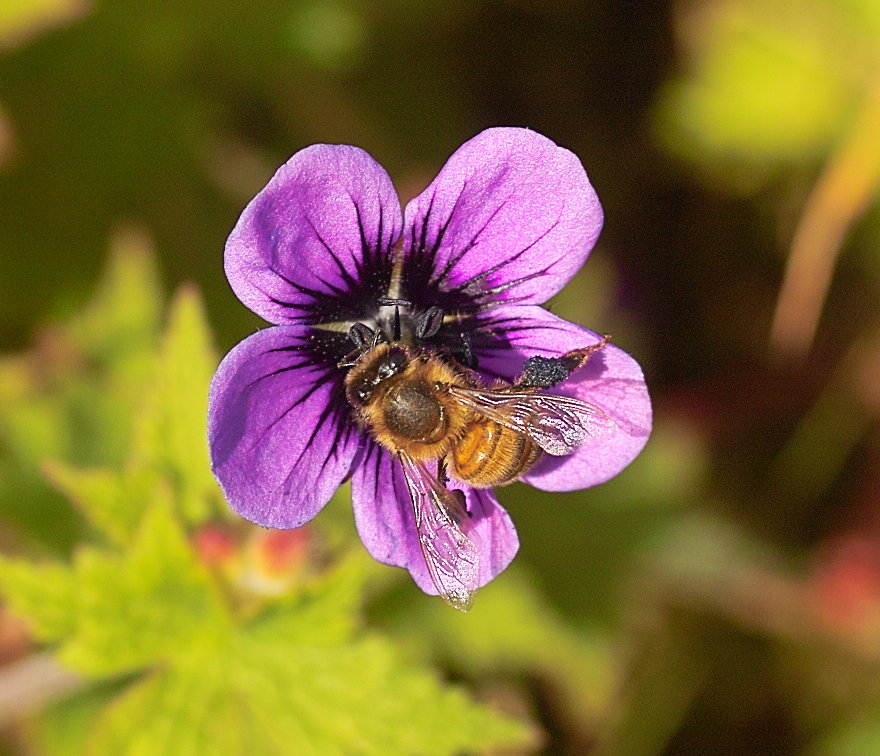
Honey bee on Geranium procurrens.
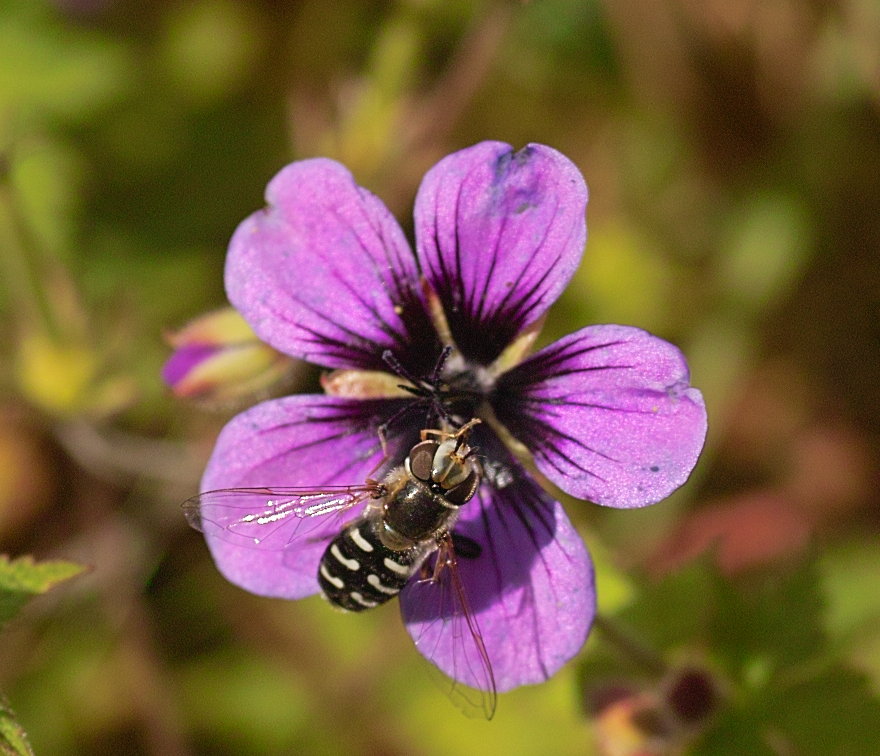
Unknown fly on G. procurrens.
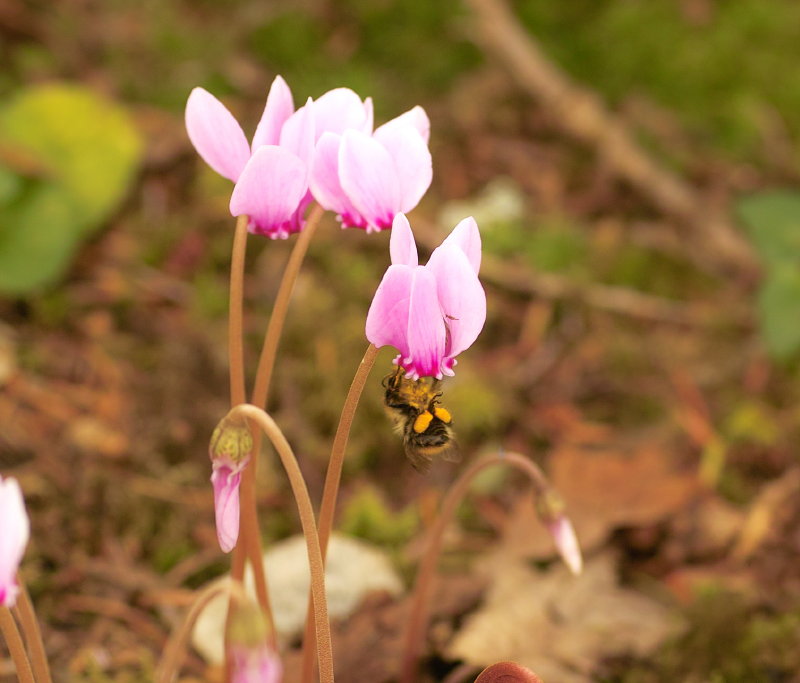
For the first time in 2011 I saw and managed to photograph a small bumblebee, Bombus pascuorum, on a Cyclamen flower. This is C. hederifolium. Apart from a very few flies visiting both these and C. coum flowers in the spring, few pollinators seem interested (or about at the time of the year, where C. coum is concerned). So for good seed production, I used to hand pollinate with a small artist’s brush. With the garden’s development over time, increased insect numbers in general, and the occasional honey bee visit to Cyclamen flowers as well, I now don’t need to, and we get reasonable seed set.

Eupatorium maculatum ‘Atropurpureum AGM is a newly introduced plant for us, and along with some other Eupatorium is a big hit with butterflies.

Clethra alnifolia ‘Hummingbird’ is a September flowering shrub, with scented white flower clusters, that appeal to some late flying moths, and flies.
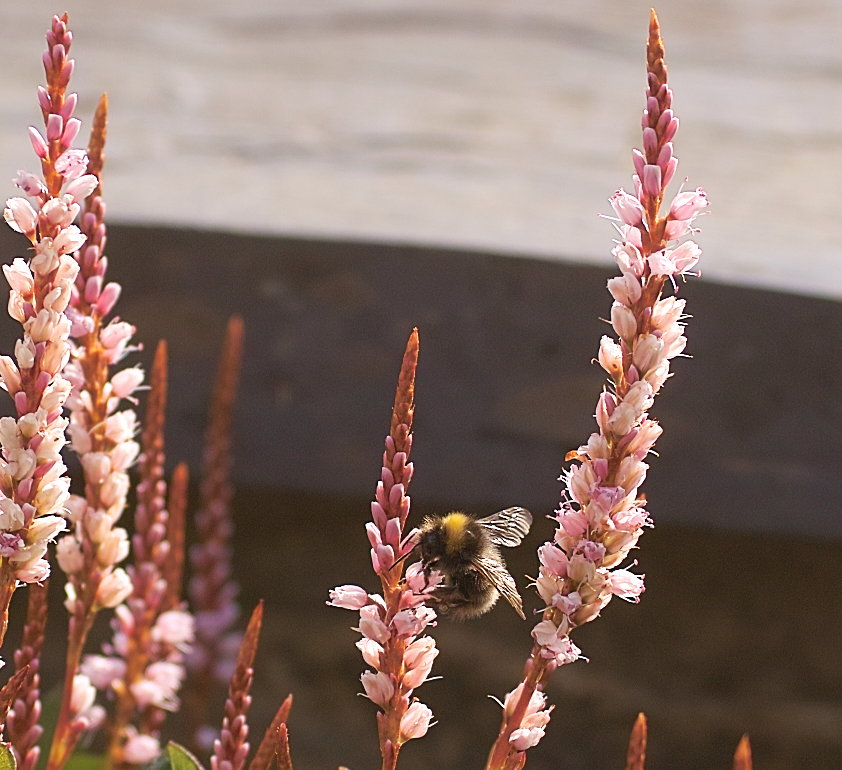
A late flowering favourite of ours for poor soil and containers, is low growing Persicaria vaccinifolia. It also seems to be a very popular late season nectar flower for some bumblebees, honeybees, flies, moths and butterflies.
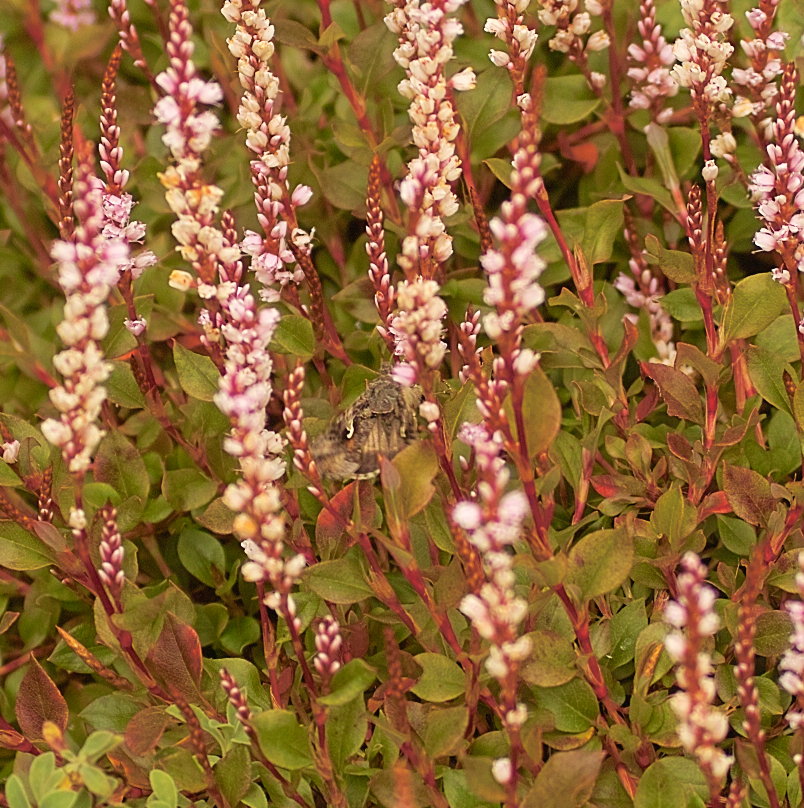
Silver Y moth on Persicaria vaccinifolia.
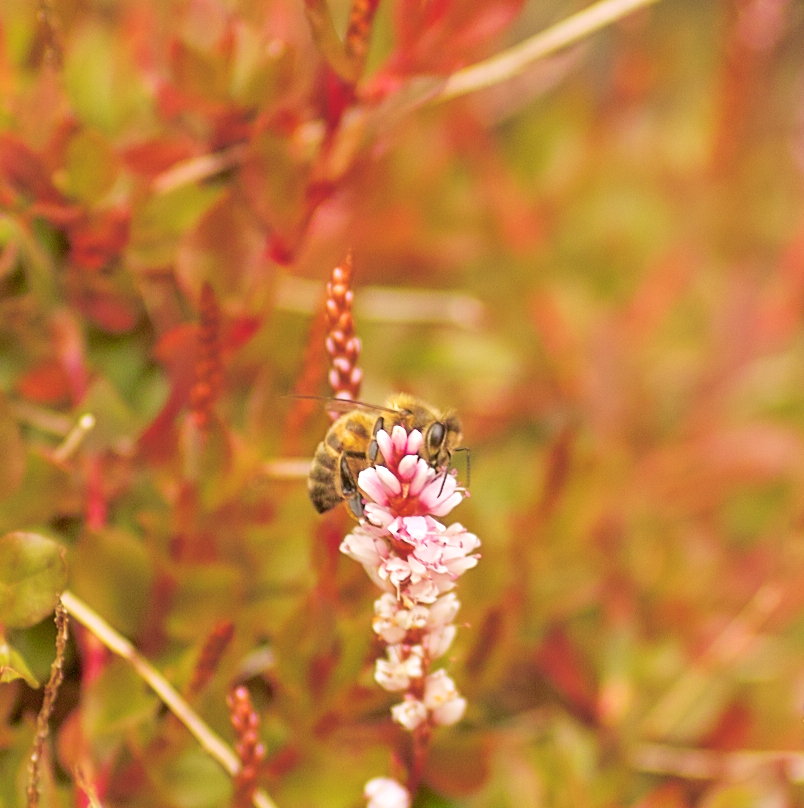
Honey bee on P. vaccinifolia.
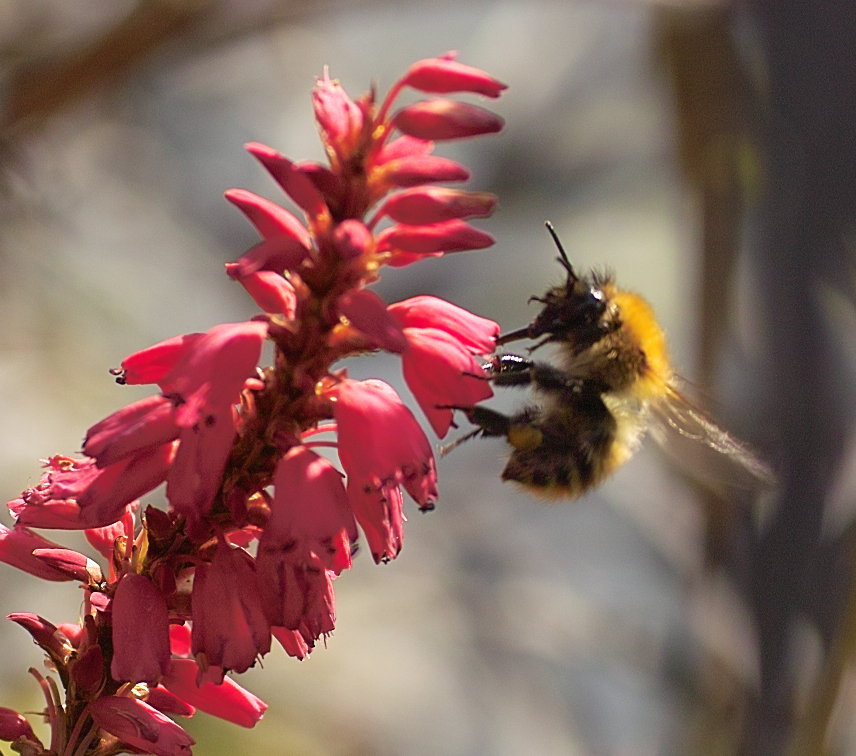
Persicaria amplexicaulis var. pendula will flower throughout the month and on into November potentially and is still a preferred flower for a couple of our bumblebee species and honey bees, particularly early in the day, and in wet weather.
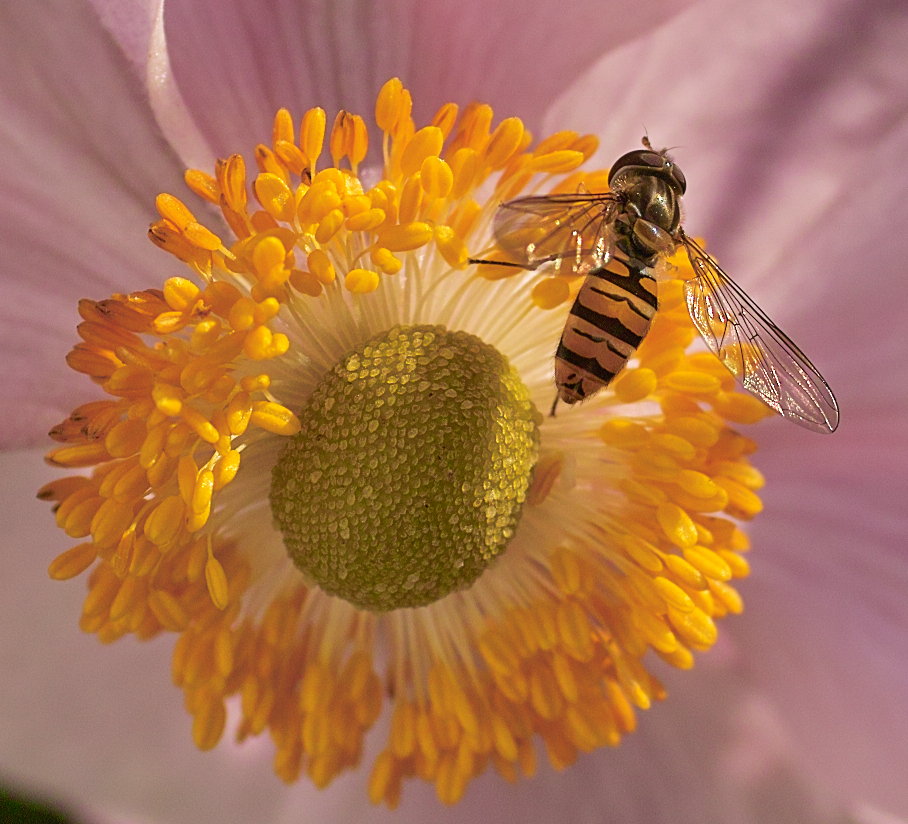
Japanese Anemone, Anemone japonica, is a bit of a thug like plant here in this common and unnamed (or lost name!) pink form, but produces masses of flowers which are really attractive as pollen sources to lots of different flies, occasionally bumblebees, and also honey bees, when the sun is on the flowers, particularly as a pollen source.
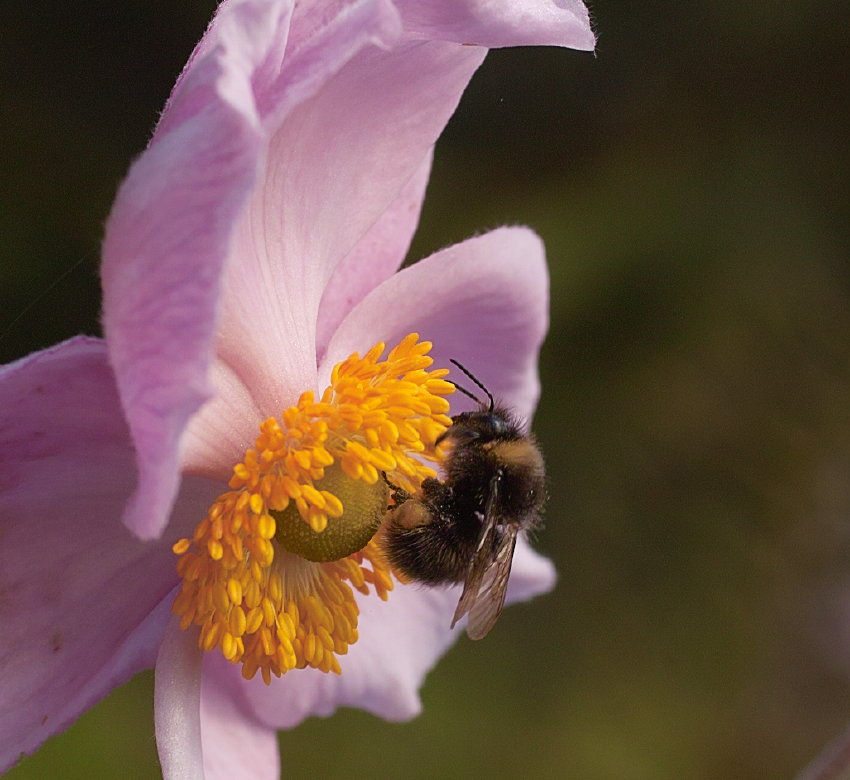
Bumblebee on Anemone japonica.
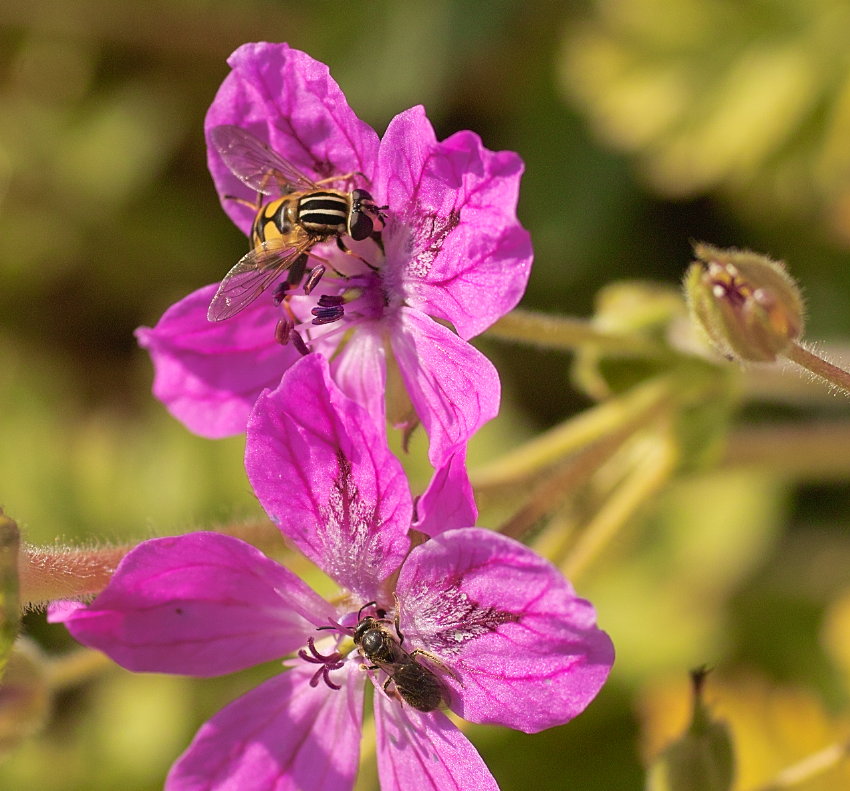
Erodium manescavii is another favourite of ours for free draining areas, and low maintenance pots, and continues flowering from May to October, and appealing to a range of flies, bumblebee and mining bees, (as the lower of the insects above is), and honey bees.
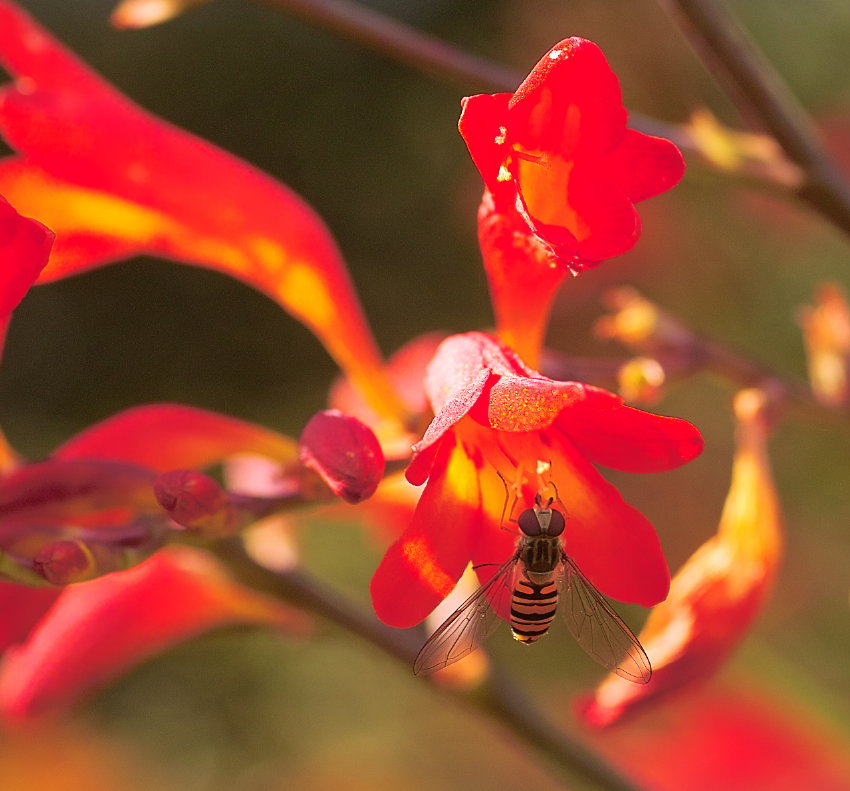
Crocosmia cultivars also flower into September, and appeal to some flies and bumblebee species.
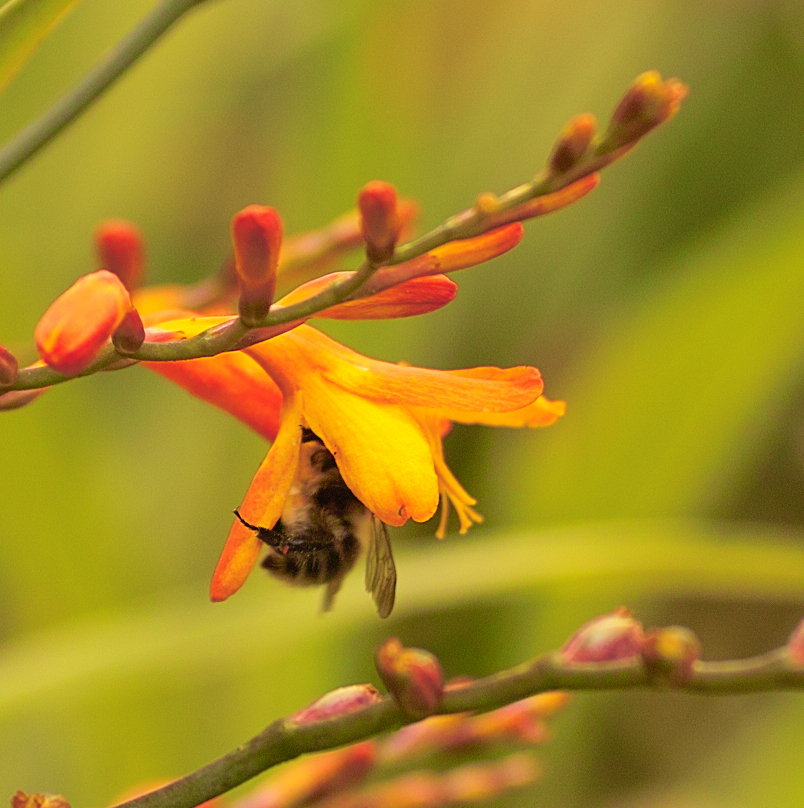

Late flowering Rosa ‘Grouse’ continues into September with a profusion of interestingly scented flowers which appeal to flies, bumblebees and honey bees.
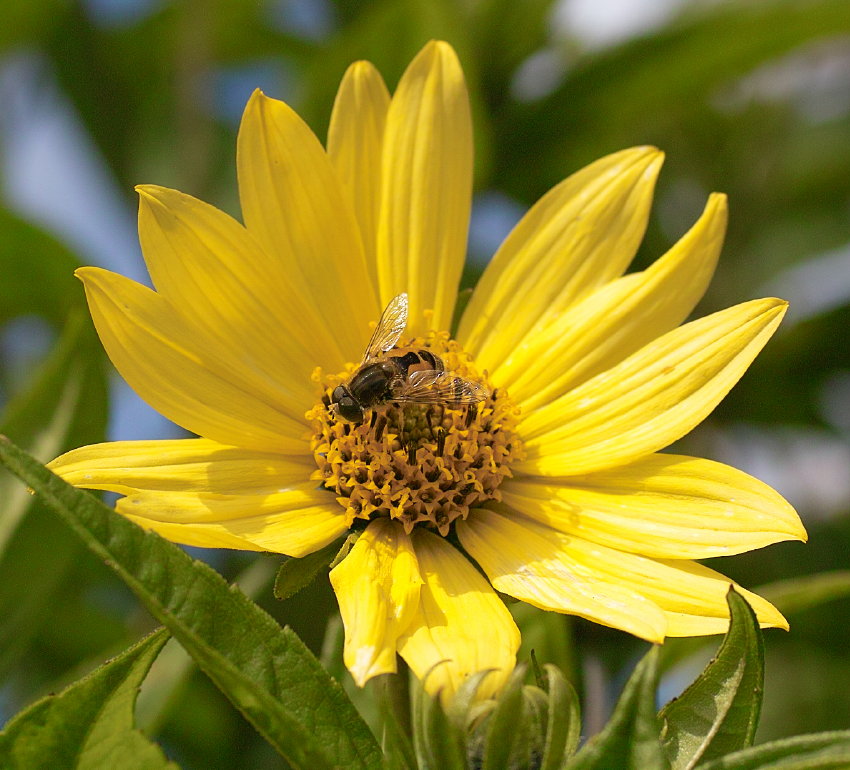
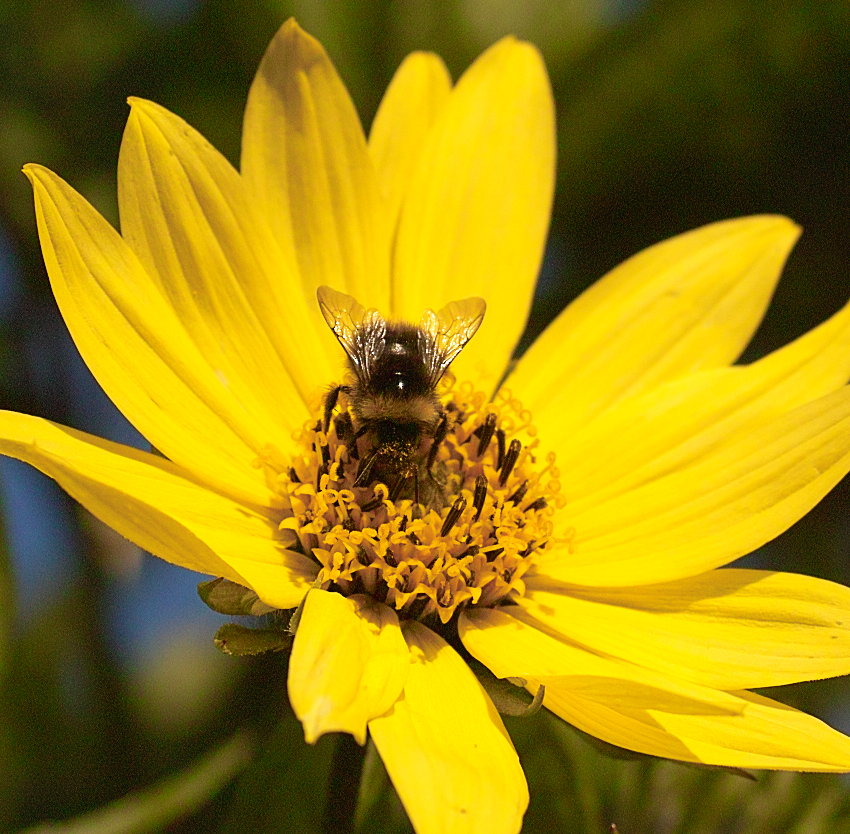
The perennial Helianthus ‘Lemon Queen’, begins flowering in September and attracts many flies, honey bees and bumblebees for both pollen and nectar.
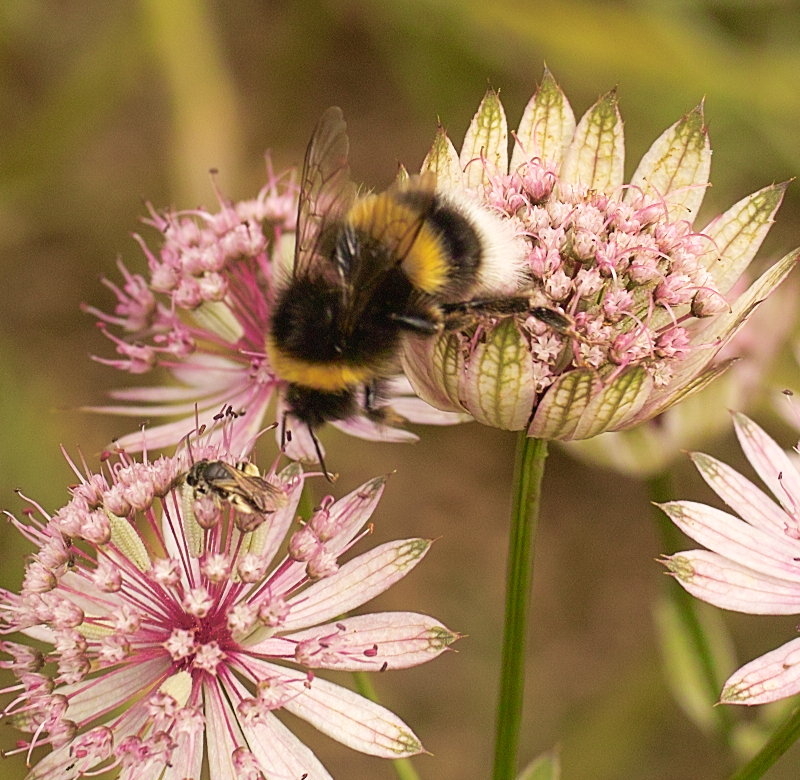
Astrantia major often seem to produce a second flush of flowers in September which attract some bumblebee species, and numerous flies.
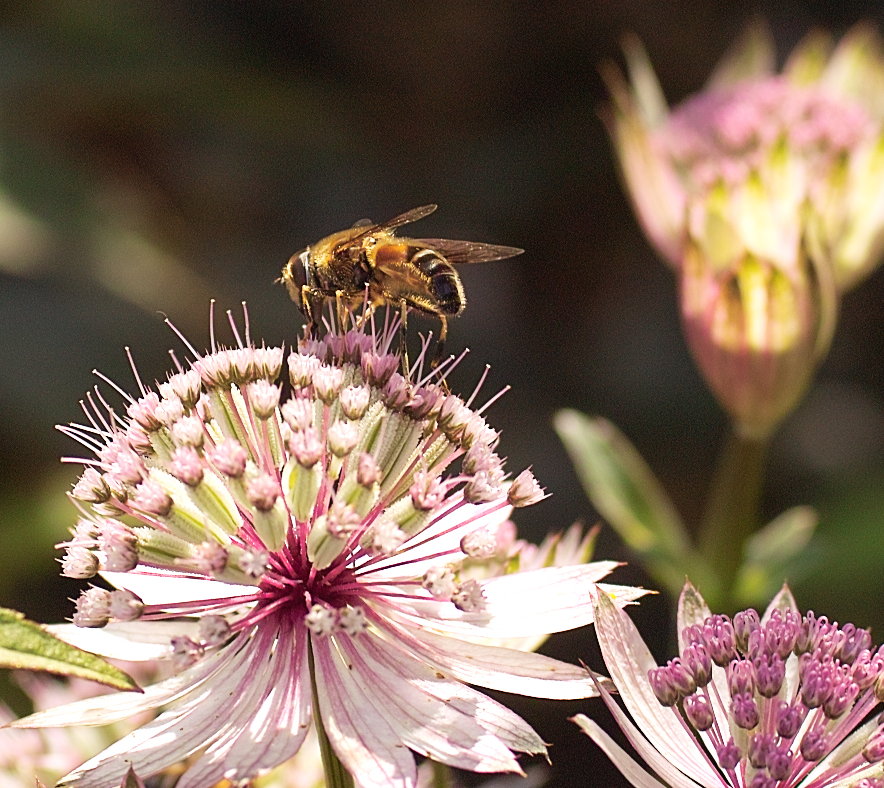
Devil’s-bit scabious, Succisa pratensis, is now a very firm favourite which we grow both in the garden and our meadows, from seed raised root trained plants. It’s a fabulous late season nectar and pollen plant for butterflies, bumblebees, flies and occasionally honey bees. We grow 2 distinct clones, the second, more typical, flowers in September and into early October.


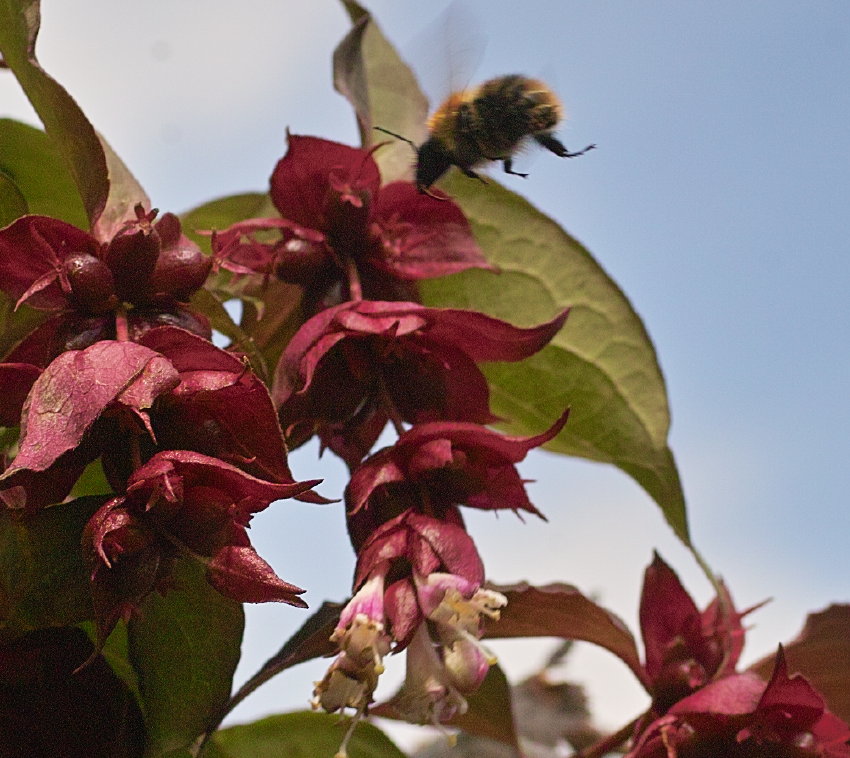
Himalayan honeysuckle, Leycesteria formosa, continues flowering into September attracting some bumblebee species, flies and, after dark, moths, which are attracted to sticky secretions around the developing fruits.
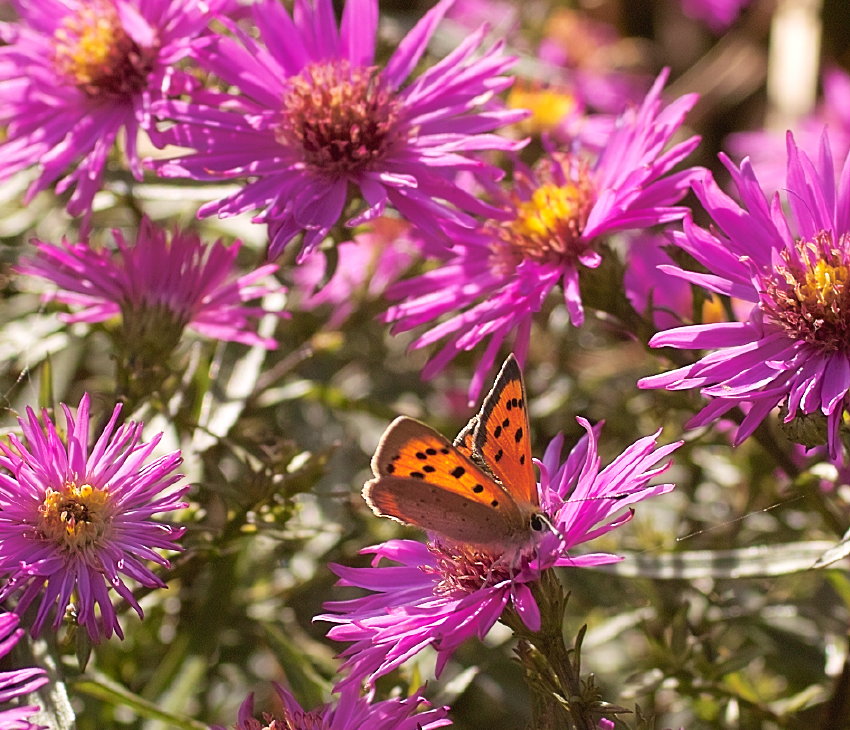
Several of our Aster cultivars begin to bloom in September, and they provide great late season nectar and pollen for a huge range of insects from butterflies and moths to flies, honeybees and bumblebees. Though many cultivars seem to have very little insect appeal, and as is often the case, sunshine and warmth seem to be necessary to bring out their best. This is a Small Copper butterfly, Lycaena phlaeas.
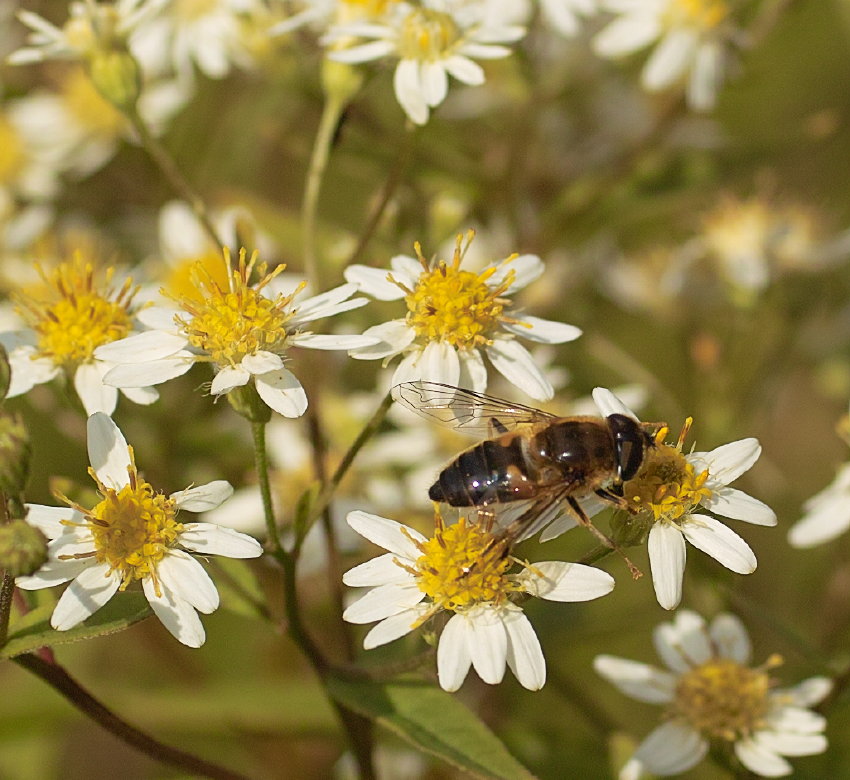
Fly on small flowered Aster.
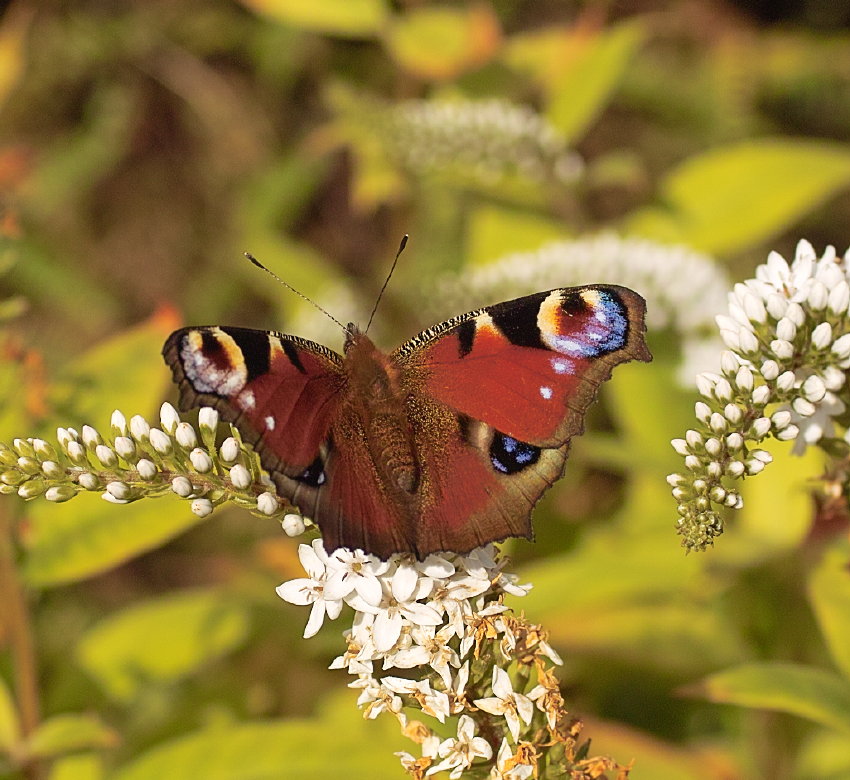
Lysimachia clethroides, one of our favourite insect friendly flowers, continues flowering into September and continues to attract butterflies, moths, flies and occasionally bumblebees, though rarely honeybees.
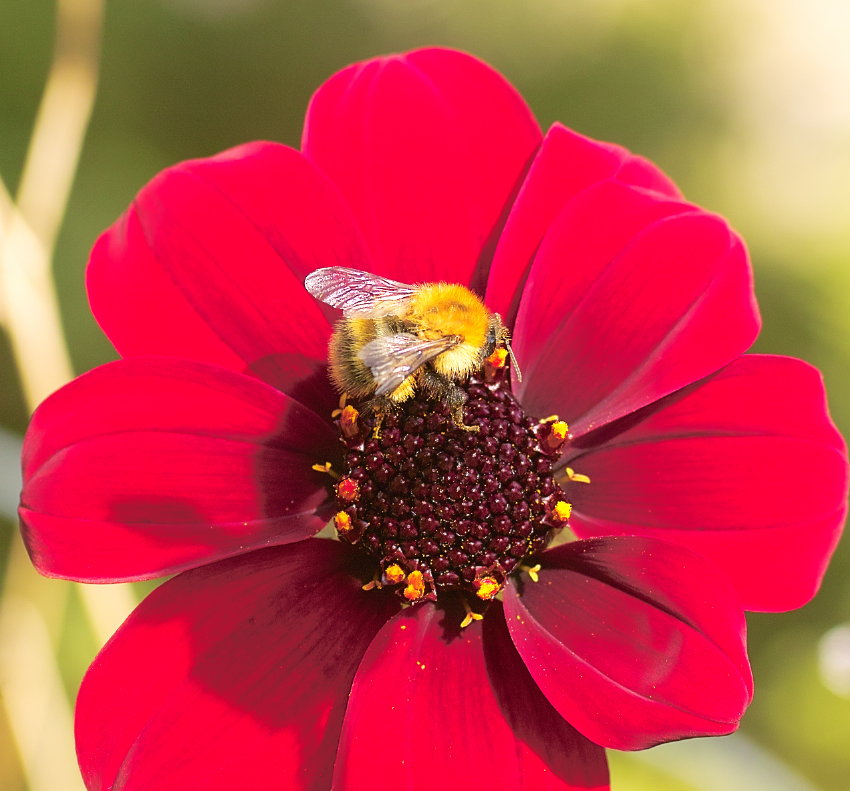
Several single Dahlia cultivars, like this Dahlia ‘Bishop of Auckland’ continue flowering into September and attract flies and bumblebees, for both nectar and pollen. Sadly they don’t survive well in our climate. Unlike the species dahlia below which is a star performer with us, and reliably hardy in the ground.
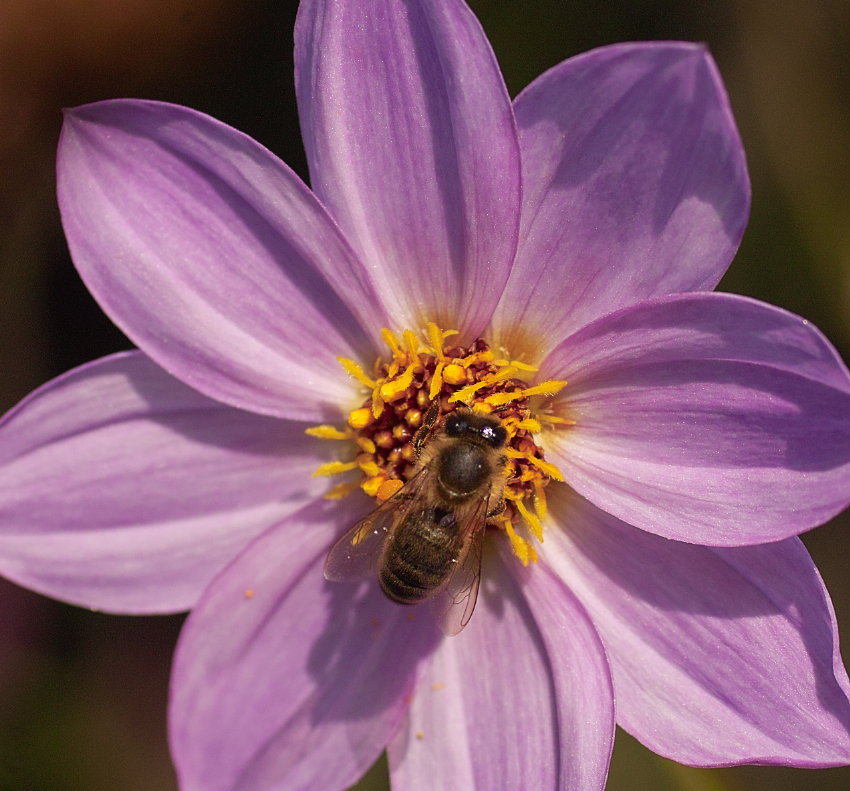 Honey bees and mining bees love this Dahlia merckii.

A hybrid Salvia, which we think is a form of S. hyans, continues flowering through September and is a great flower for larger bumblebees and the occasional Hummingbird hawkmoth which visits the garden. 


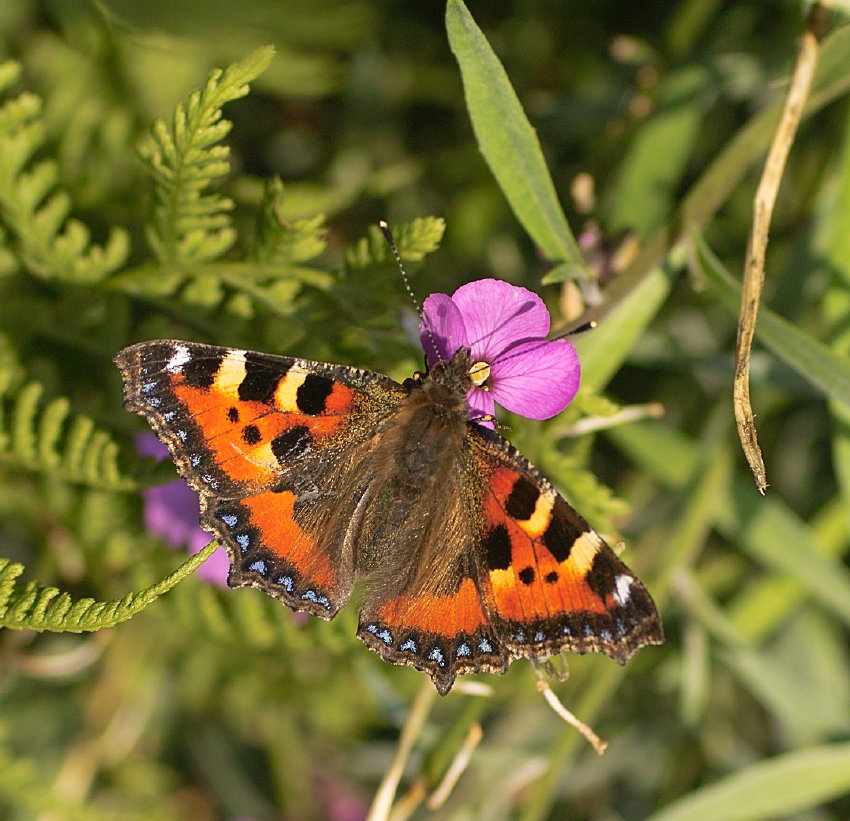
Erysimum ‘Bowle’s Mauve’, is another plant which flowers continuously from May, but it’s in September that it seems to excel here as a butterfly attractor, for nectar, and also gets occasional fly and bumblebee visits, as below. Sadly it’s short lived and we haven’t bothered to keep it going with cuttings.
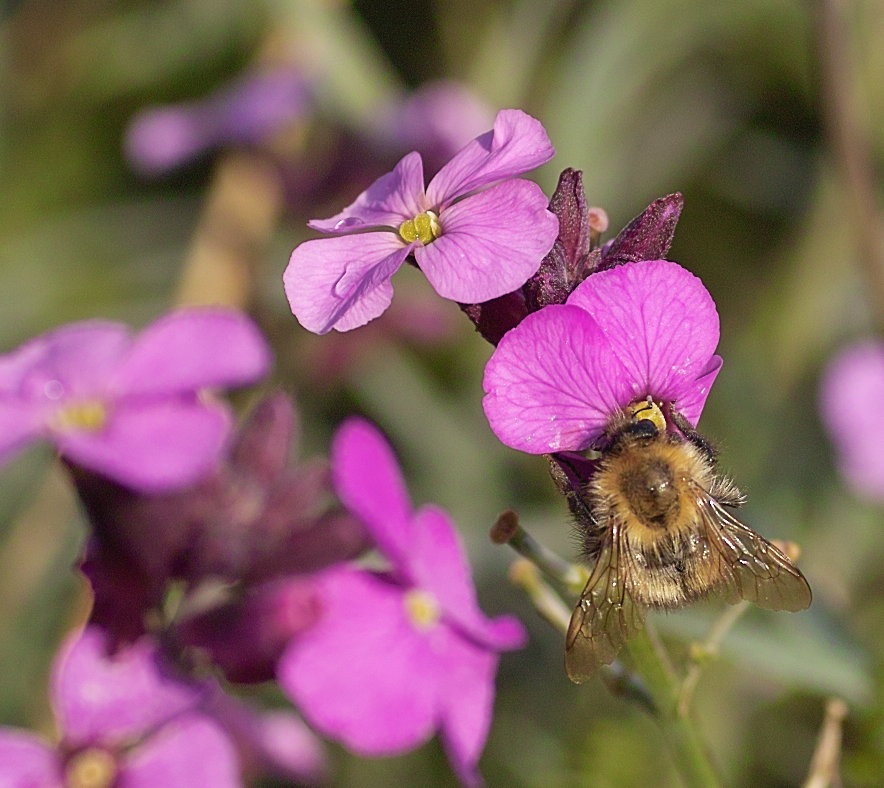
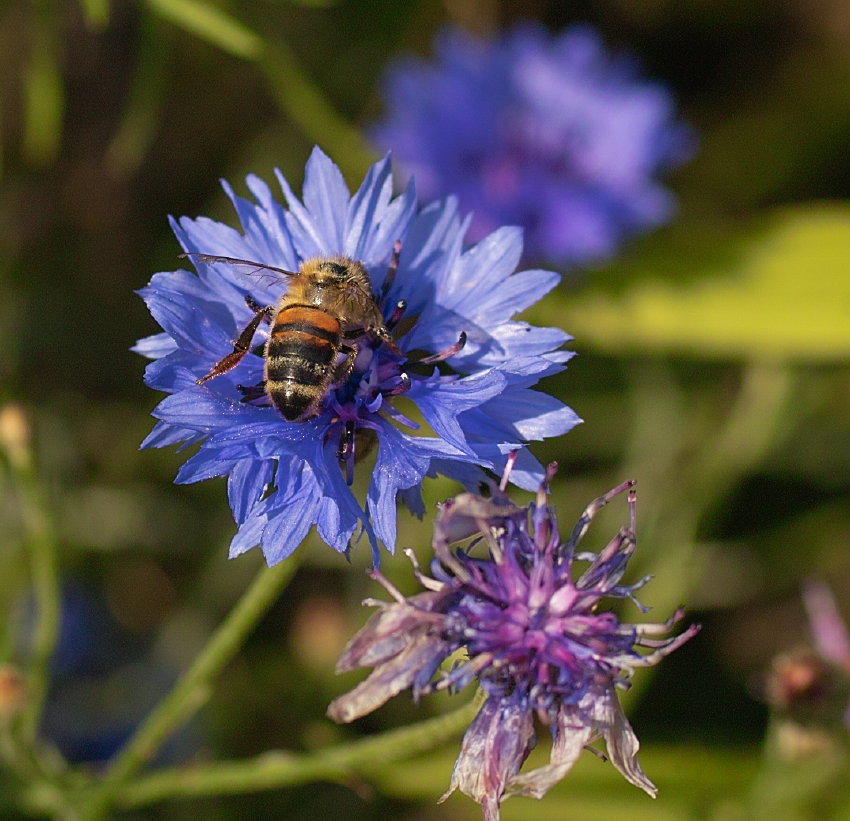
One of our newly grown annuals for 2012, which we’ll repeat next year for its stunning blue flowers as well as it’s fly, bumblebee and honey bee appeal is the native cornflower, Centaurea cyanus.
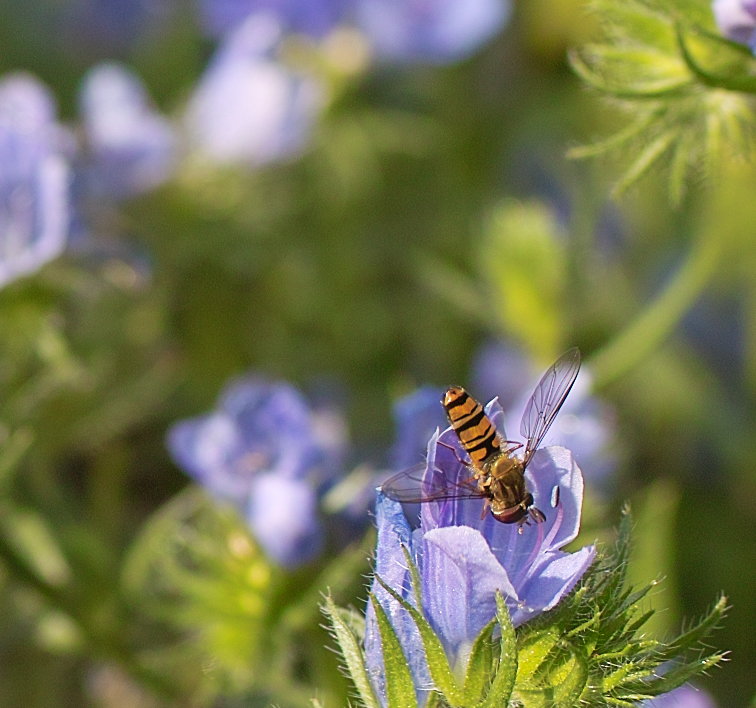
And another lovely floriferous blue annual, Echium ‘Blue Bedder’, which appeals to flies, honey bees, bumblebees and a few moths as a nectar and pollen source flowering continuously through the summer.

Honey bee on Echium flower. Early in the morning, it took the bee quite a time to select a flower to visit out of many apparently similar ones. Perhaps a flower which needs a little warmth to release nectar?
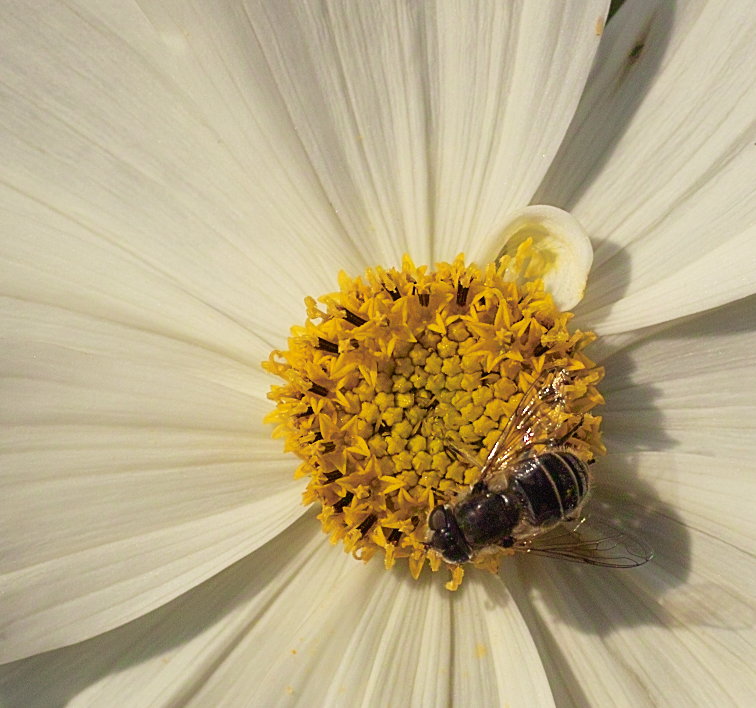
Cosmos ‘Purity’ which is another annual which attracts flies, bumblebees and honey bees.

Aconitum ‘Spark’s Variety’ continues flowering into September and is really popular with a couple of bumblebee species, and we value it for the richness of its purple flowers, even if it is a highly poisonous plant.
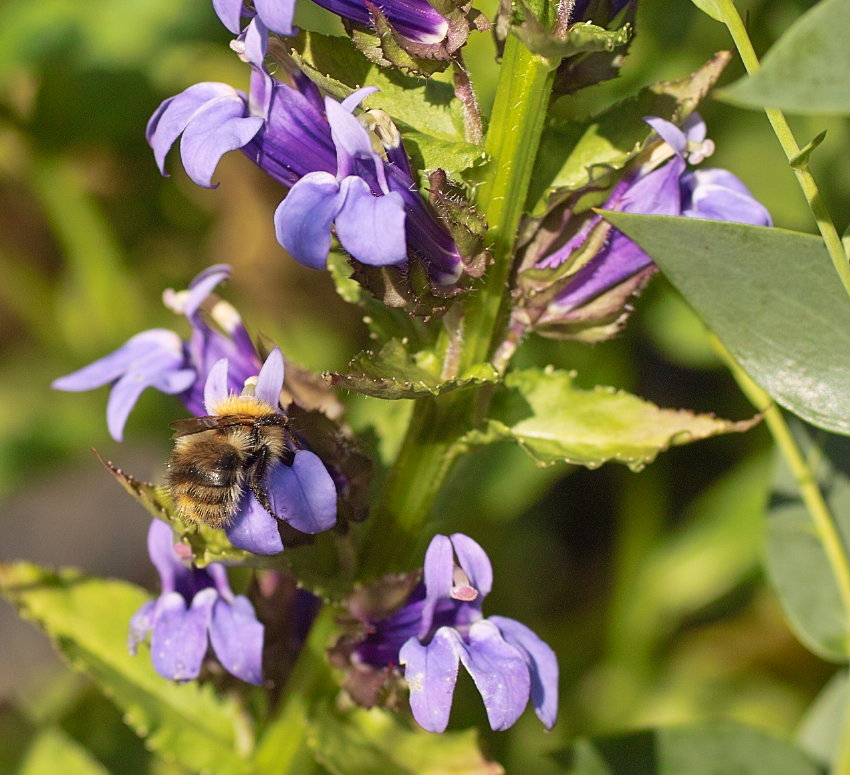
A new perennial for us in 2012 was Lobelia siphilitica, which seems attractive to some smaller bumblebee species, and occasionally honey bees.
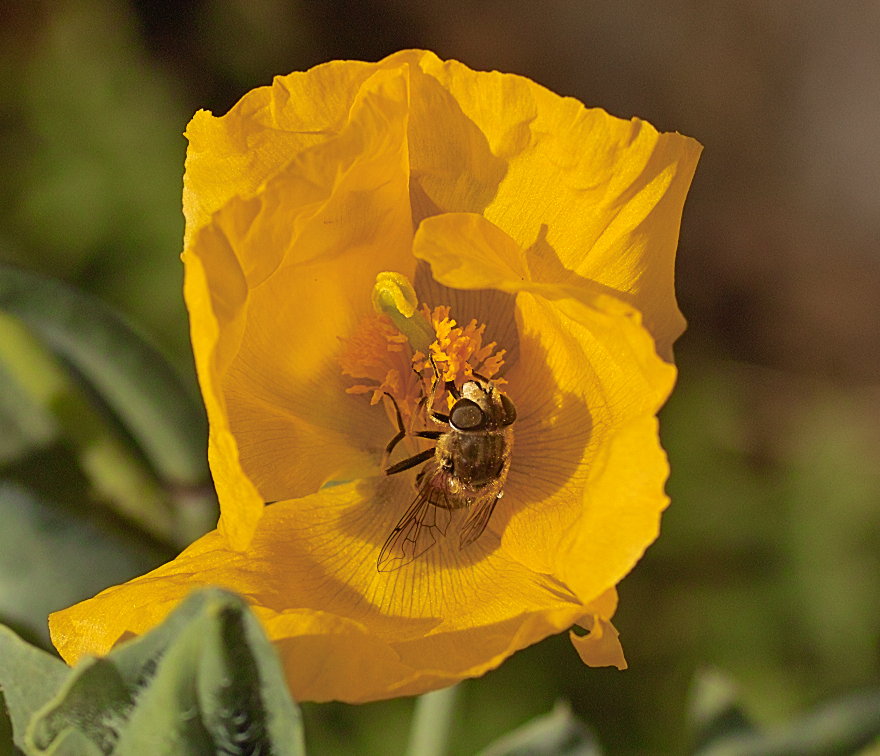
Native Yellow-horned poppy, Flavium glaucum, continues flowering into September and attracts lots of flies and bumblebees as a nectar and pollen source, but has sadly been smothered out by other more vigorous plants in our gravelly area.
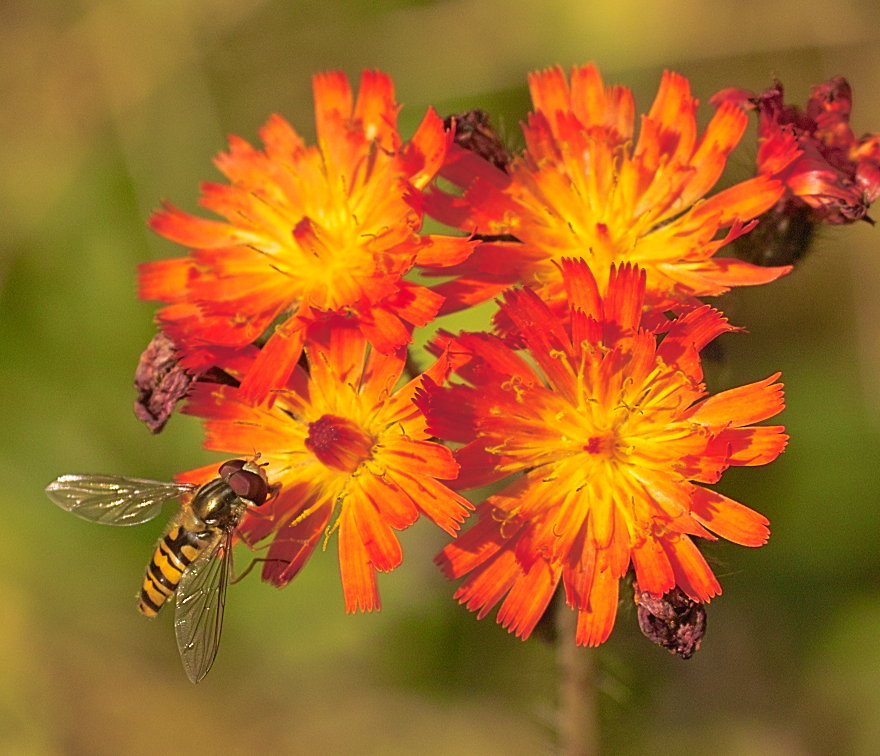
Fox-and-cubs, Pilosella aurantiaca, attracting mainly flies, some bumblebees, and occasionally honey bees and is a lovely splash of vibrant colour but a short term thug, before it moves on.
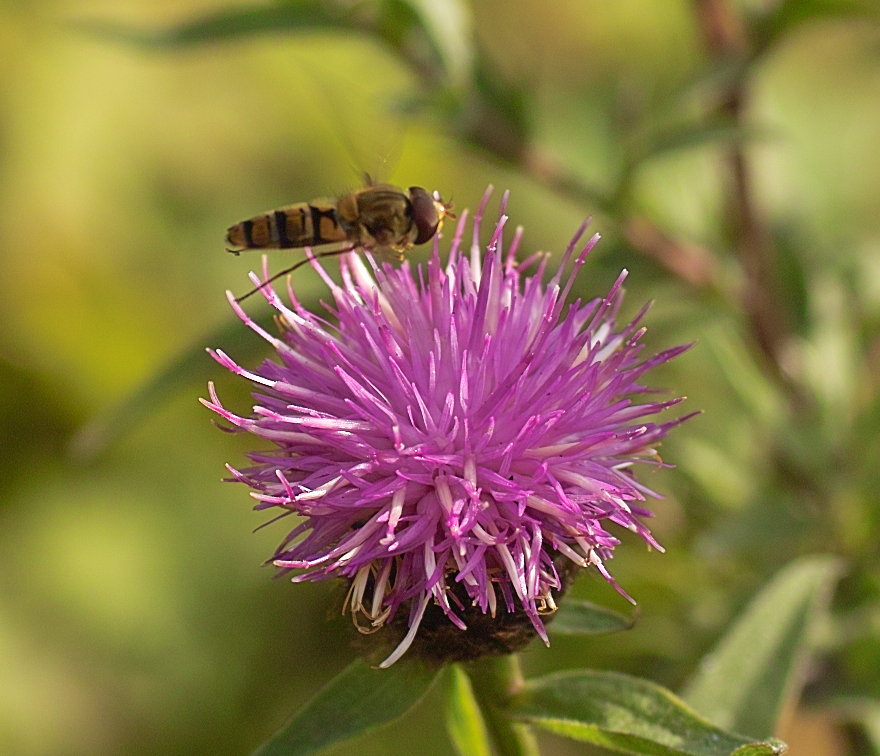
Native common knapweed, Centaurea nigra, only just keeps flowering into September, but still receives various fly, bumblebee species and honey bee visits.

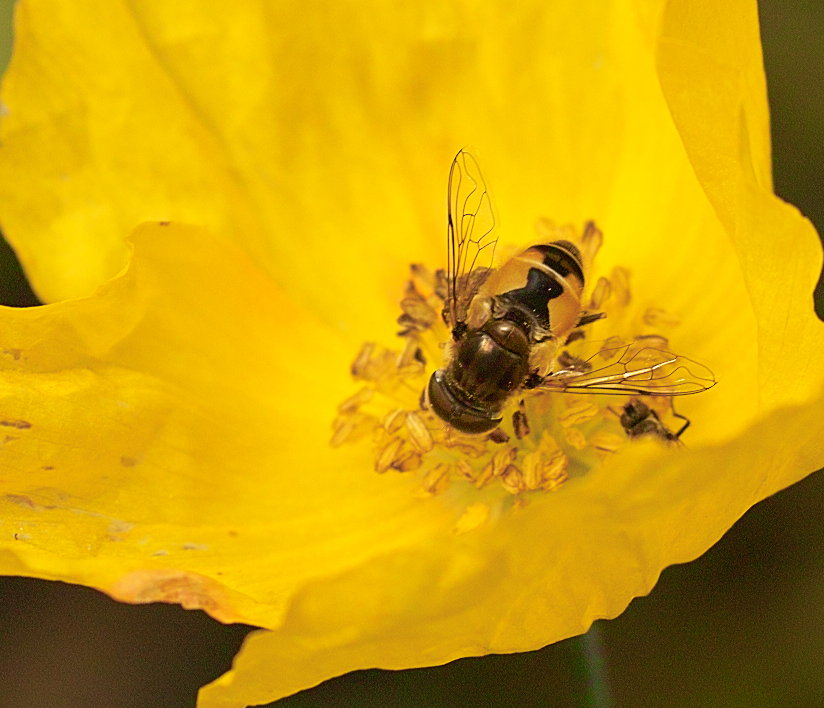
Native Welsh poppy, Meconopsis cambrica, continues to flower with a few blooms in September, and still gets fly and some bumblebee species visits.
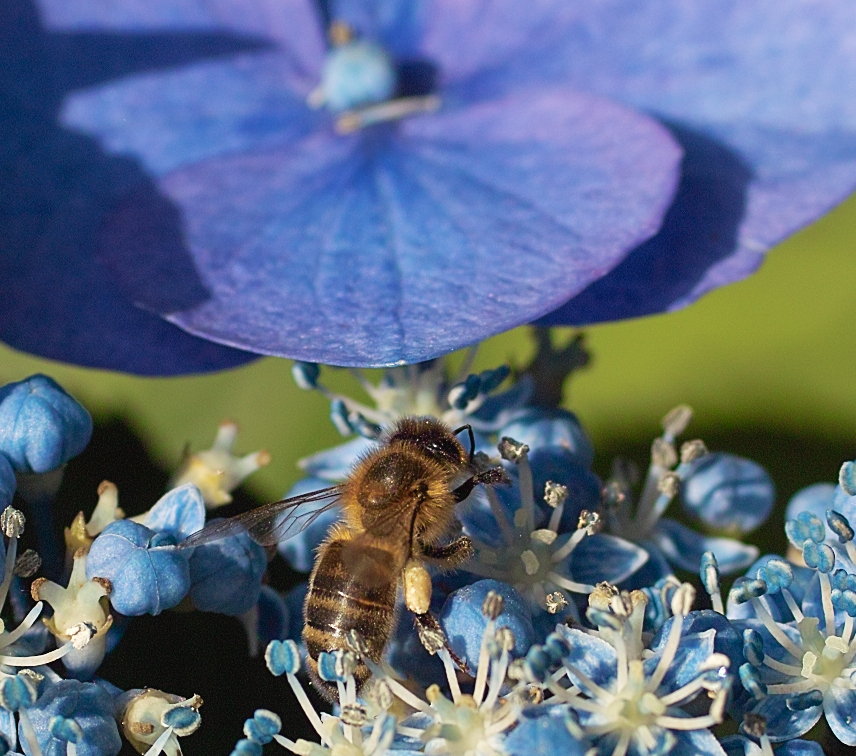
Many of our serrata and villosa Hydrangea cultivars receive lots of visits from pollen collecting honey bees. Very few other insects seem to visit the small flat flowers of Hydrangeas – just the very occasional bumblebee and a few flies. This is the stunning H. ‘Blue Zorro’ cultivar.

Meanwhile the adjacent plants of a couple of Chelone obliqua and C. glabra cultivars are actively sought out by a couple of bumblebee species, which largely ignore the Hydrangeas.
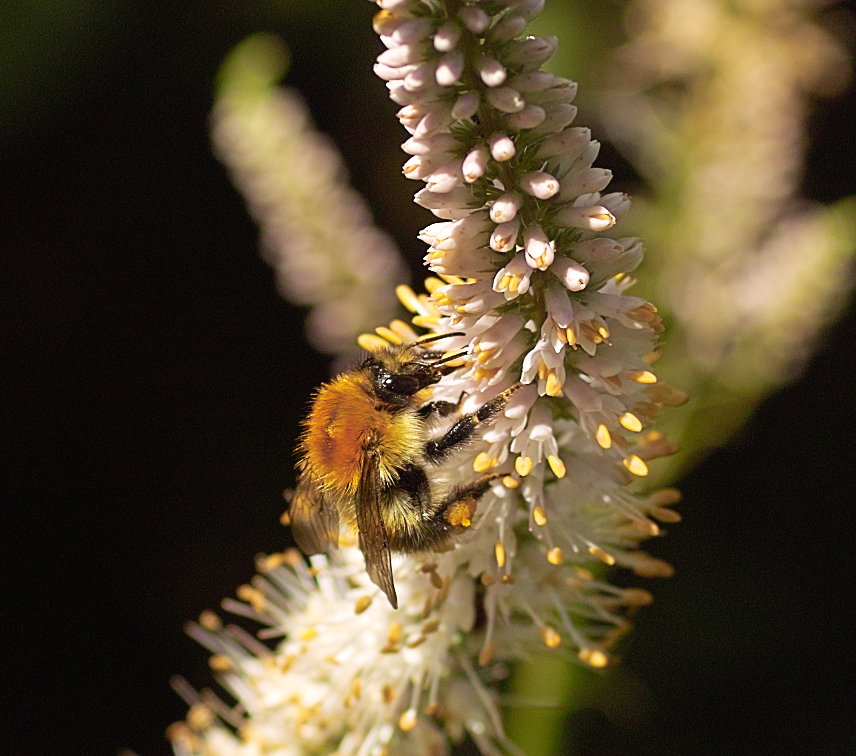
Another perennial flowering into September is Veronica longifolia ‘Rose Tones’, which attracts a few bumblebee species, some moths, and occasionally honey bees.
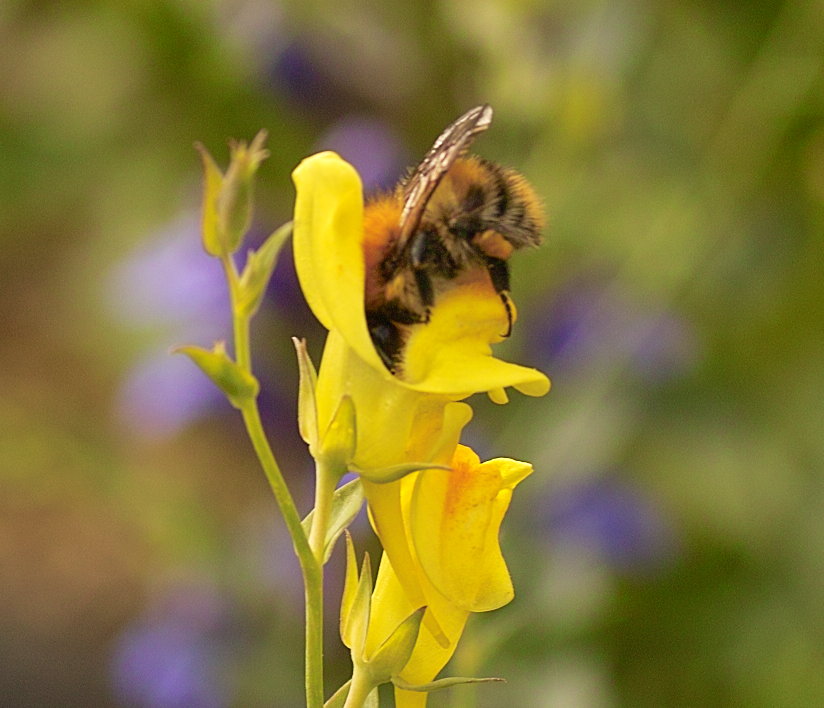
Linaria genistifolia continues flowering for several months into September with masses of flowers, but it’s only rarely that I see a bumblebee or other insect on its pretty flowers.
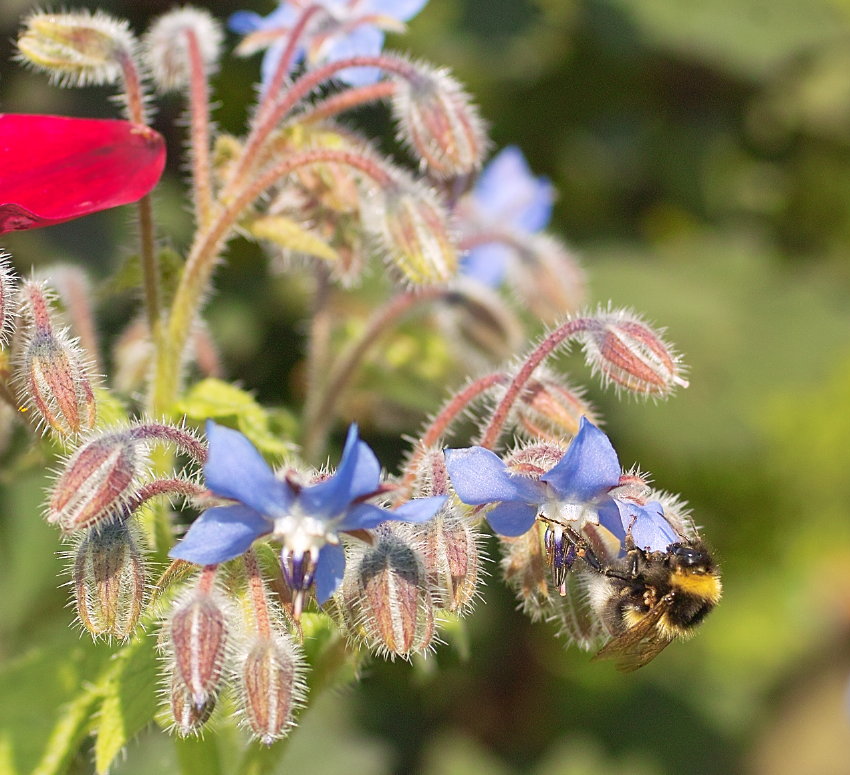
In contrast, the nearby annual blue borage flowers, Borago officinalis, are a firm favourite with many bumblebees and honey bees.
At last I’m getting round to updating some of these pages, a decade after I first posted them!
Last updated 09/11/2023