Please read the introductory page in the Real Botany of Desire for the background to why I’m listing the observed insect favourite flowers that bloom during this month, and which seem to be the most popular with the groups of insects which frequent our garden. An impossible task to pick my top 3 insect friendly flowers in this month of stunners. But I’ll go for Buddleia davidii, Verbena rigida and Allium sphaerocephalon.

And as always, there’s an overlap with many flowers from July still going strong.
If reading my introductory page is a click too far, then briefly, there’s a huge issue with loss of wild flowers as agriculture intensifies and mono-cultures prevail. This impacts on all the insects which rely on flowers as food sources. But all flowers aren’t equal in their appeal to insects, or particular groups of insects, (e.g. honeybees, bumblebees, hoverflies, moths, butterflies) and many nursery-bred plants have been designed to be attractive to our senses, not insects. Some flowers are useful as both pollen and nectar sources (P, N) whereas others just seem to provide one of these insect foodstuffs, and I’ll try to include this information with the images. So this simple record is to help gardeners think about this issue, and maybe plant more flowers to help our very diverse native insect groups. I’ve found that many of the best plants seem to be some of our native wildflowers which can in other respects have real garden merit. Equally, there are many plants from the other side of the globe which are preferentially favoured over native flowers at certain times of the year – there is no simple easy guide to their relative appeal. The positive spin-offs from incorporating more insect friendly flowers in our gardens apart from the appeal of seeing the insects themselves will be better pollination of our crops, and more varied wildlife in our gardens, since insects are at the bottom of many animal food chains.
It’s certainly not exhaustive, and if you know other flowers which have equal appeal, which aren’t listed here, do please let me know, and I’ll try them up here as well. This work started a couple of years before my blog began in March 2011, but previous to that I’d produced the UK’s first DVD-ROM guide to Garden Moths ” In A Different Light”. This project attempts to widen that work in a more general way.
August is a month when insect numbers seem to recover from their July dip in our garden. In particular, usually from the middle of the month onwards comes the peak in butterfly numbers for the whole year. We’ve specifically created an area of the garden to attract them over the last few weeks of summer with many Buddleia varieties which we deadhead to extend the flowering season, Golden Marjoram and Sedum spectabile. So far every year we have managed a ‘Welsh fifteen’ moment, when we can simultaneously count over 15 butterflies in this part of the garden, and we’re fortunate to have an ancient bluestone seat from which we can take in the magic of so many fragile insects dancing amongst the flowers. As I update this in mid-August 2012, it seems unlikely we’ll achieve this with so few sunny days. In contrast to 2011 when we had almost nuisance populations of wasps, I haven’t seen a single wasp for weeks.
Finally, as I mention elsewhere, the actual number of flowers of a single plant type growing together, and their position in the garden (e.g. or shade), can also impact on how favoured the flowers are by your garden’s insect population. Probably because sun and warmth can affect nectar and pollen production and release, and large groups of similar flowers provide a more obvious foraging target.
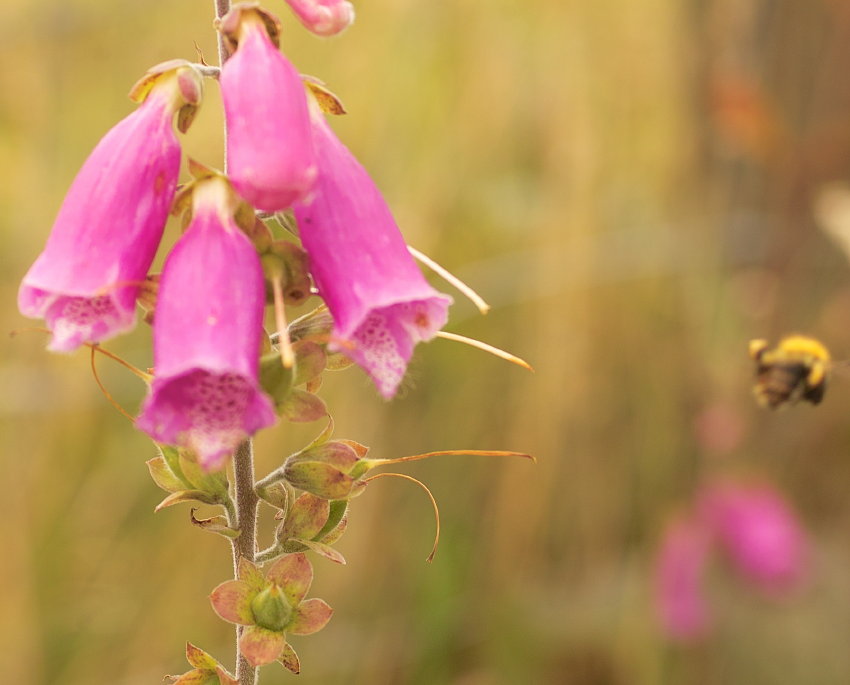
The common Foxglove, Digitalis purpurea, sometimes continues flowering into August and still attracts some larger bumblebee visitors, although with fewer flowers the visits are fleeting.
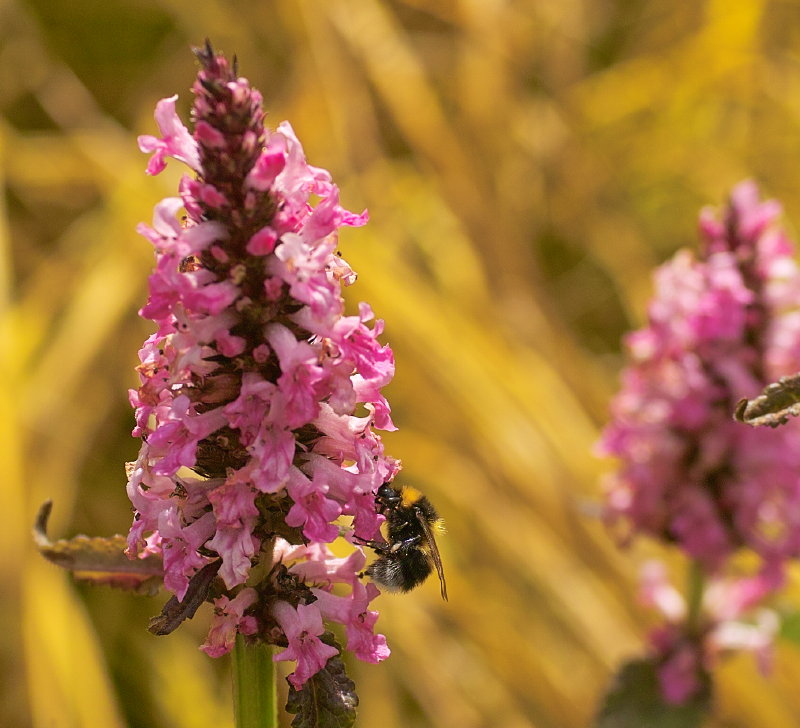
Also still flowering, and attractive to bumblebees, moths, flies and honey bees are the pink and purple spikes of Stachys officinalis, and S. ‘Hummelo’.
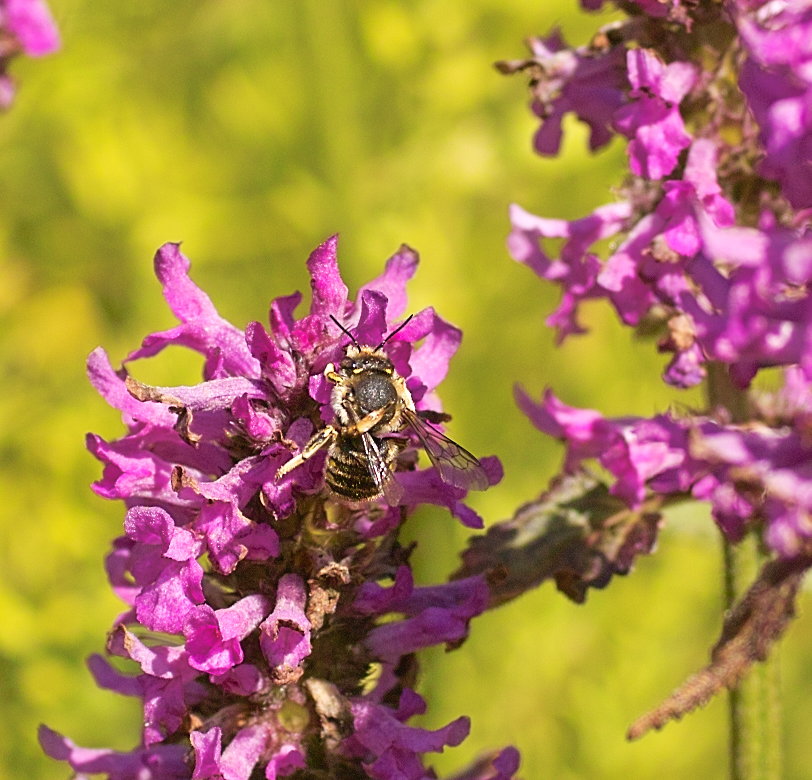
I don’t know what this wasp/bee-like insect which patrolled the S. ‘Hummelo’ flowers in mid-August 2012 was, but it was another insect fan.
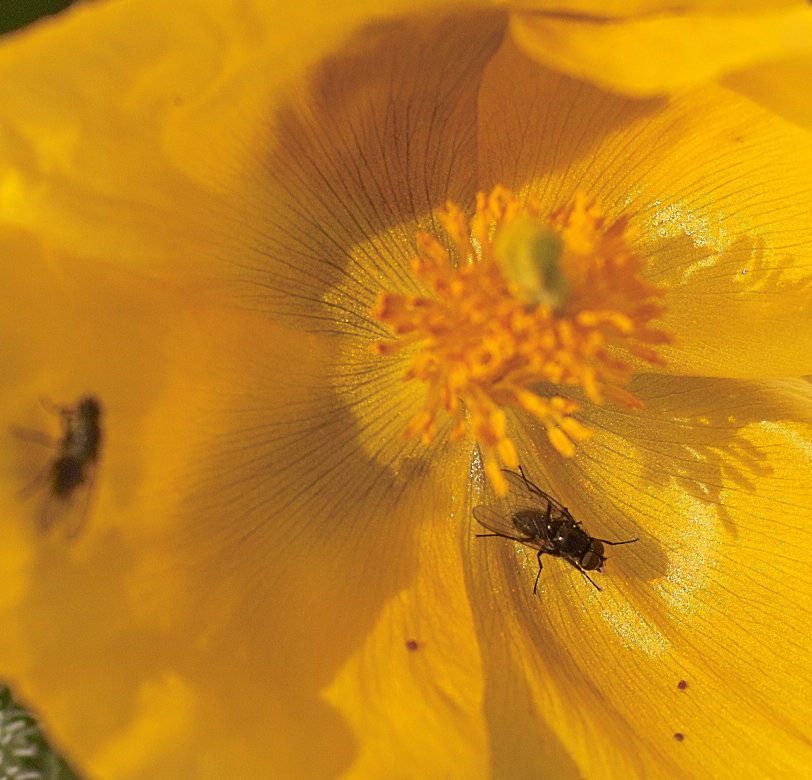
The native Yellow-horned poppy, Flavium glaucum, continues flowering into August and attracts several fly species, and occasionally now, bumblebees. Sadly this plant had died out in the years since I photographed it, through too much competition where it grew.
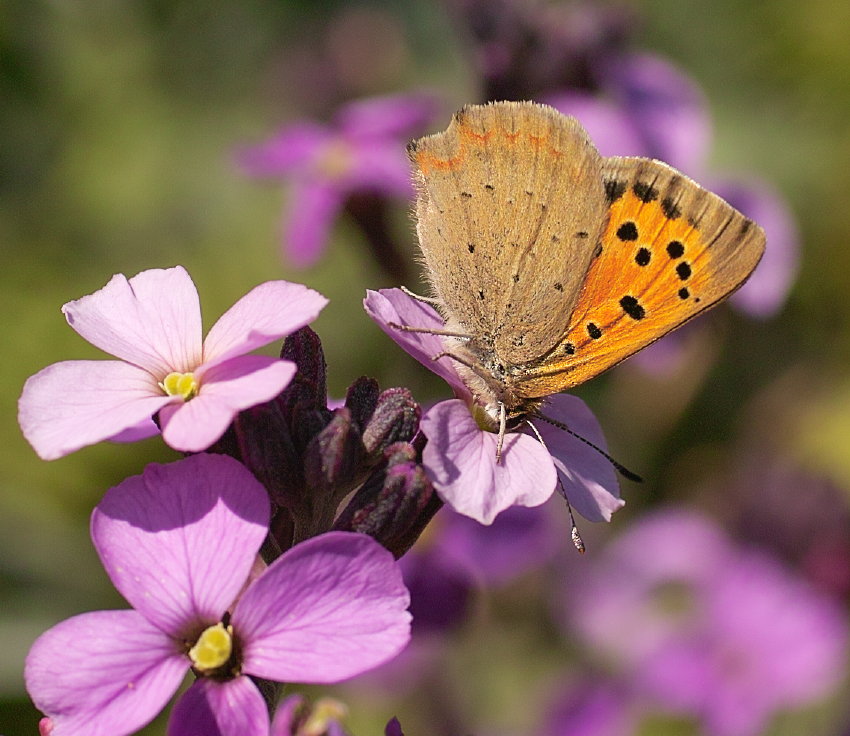
One of my favourite images of 2012. A pristine Small Copper butterfly, Lycaena phlaeas, nectaring on the flowers of Erysimum ‘Bowle’s Mauve’. This proved to be a great garden plant flowering continuously for months on end, but it hasn’t had quite the insect appeal I was expecting. However, it’s another fairly short-lived plant we can no longer find a space for.
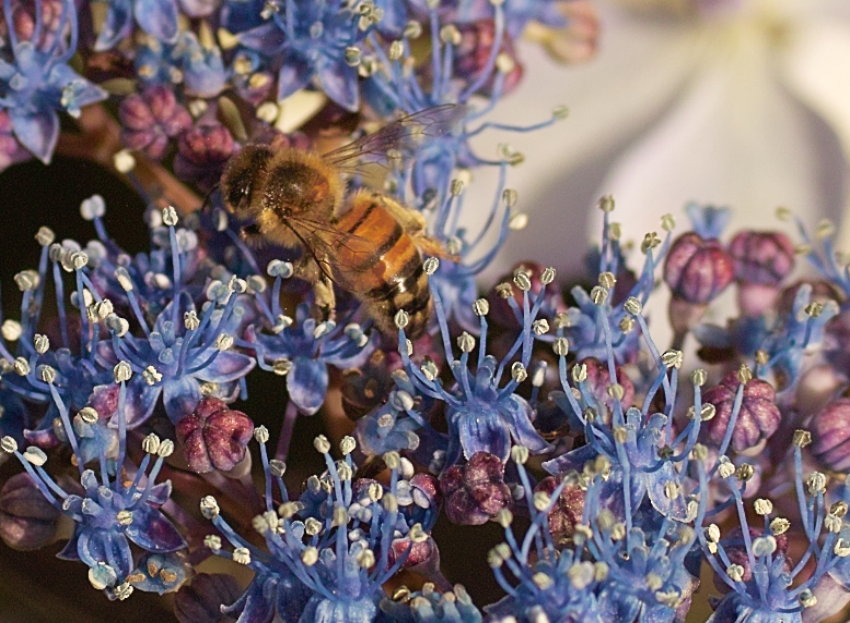
2012 was the first year we saw some honey bee visits to a few of our many Hydrangea serrata plants.
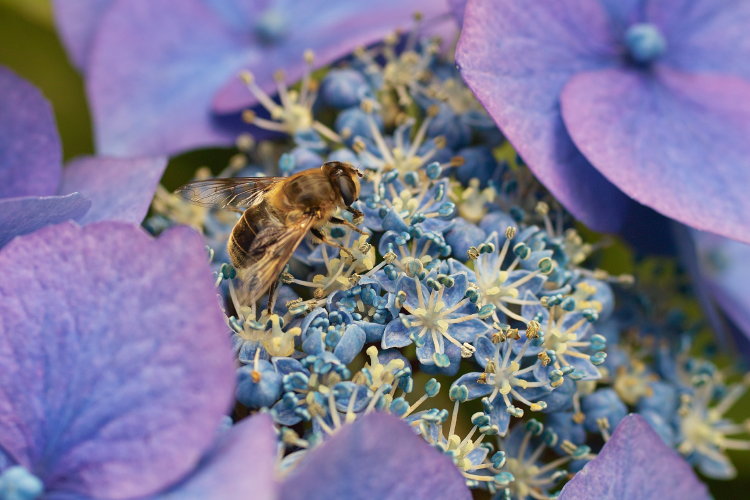
Hydrangea flowers are in the Saxifrage family and were not initially visited by many bees, until they became more numerous in the garden. They’ve always attracted hoverflies and other flies occasionally. I was photographing this ‘Blue Zorro’ flower when a fly dropped in. 28/08/11. Of course the outer, larger blue ‘petals’ are sterile – only the tiny flowers in the centre of the plant are fertile.
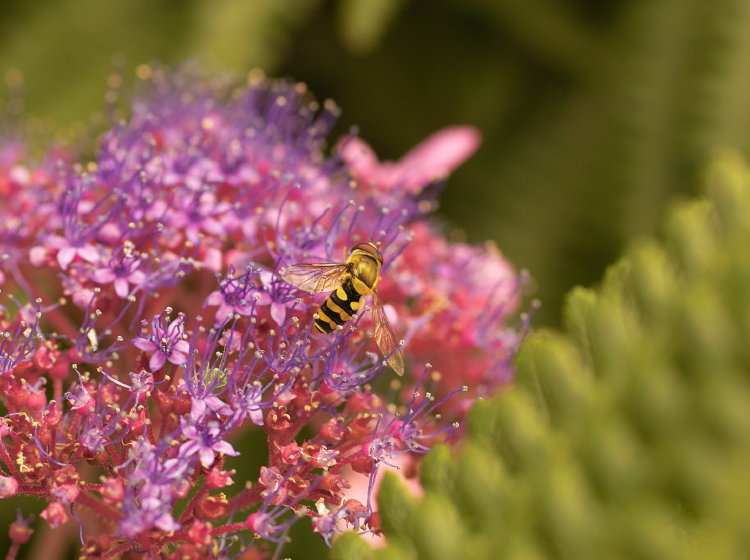
Hoverfly on Hydrangea villosa 29/08/11.

Bumblebee on white Buddleia davidii – an unknown cultivar. 23/08/11.

Many Buddleia cultivars continue to attract large numbers of butterflies, moths and bumblebees throughout the month like this Small Tortoiseshell, Aglais urticae butterfly 23/08/11.
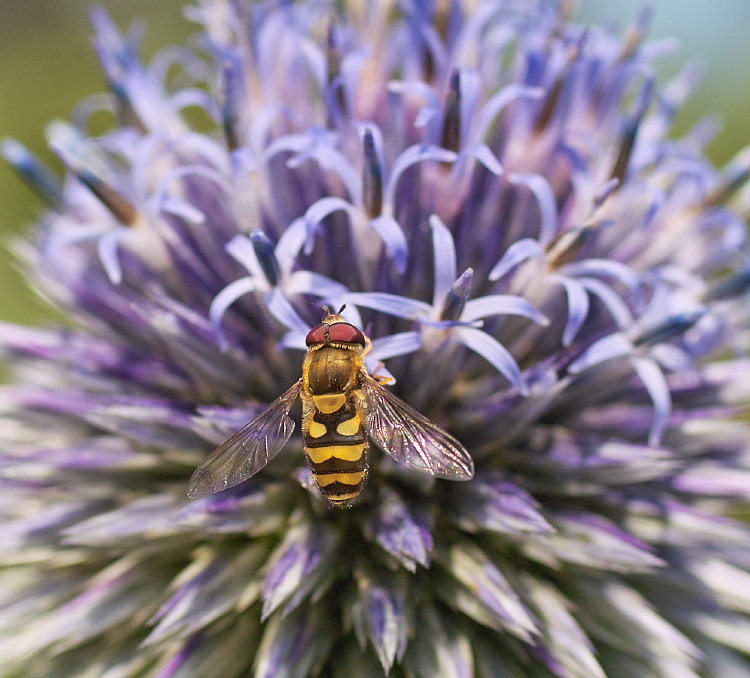
The thistle-like flowers of Echinops ritro are valuable late-season nectar and pollen sources for many bees, bumblebees and flies 23/08/11.
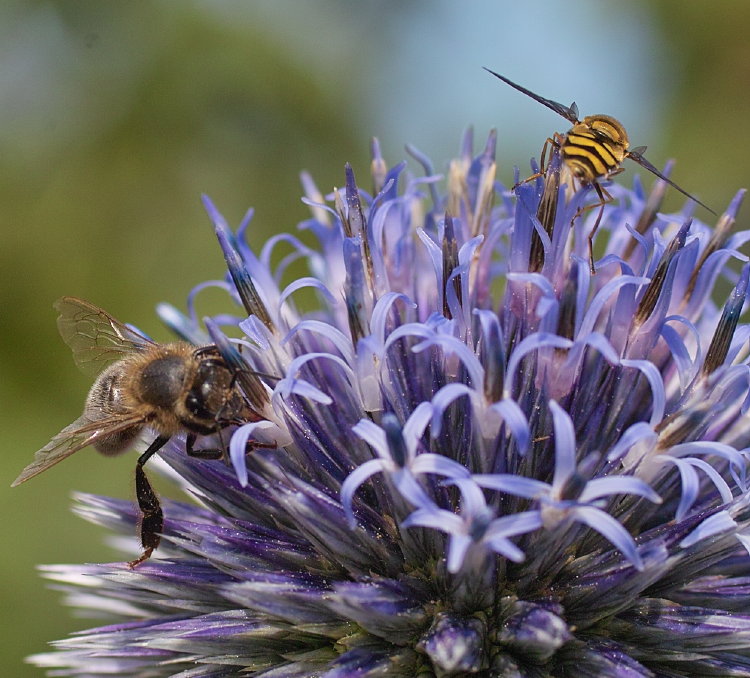
Echinops ritro 23/08/11.
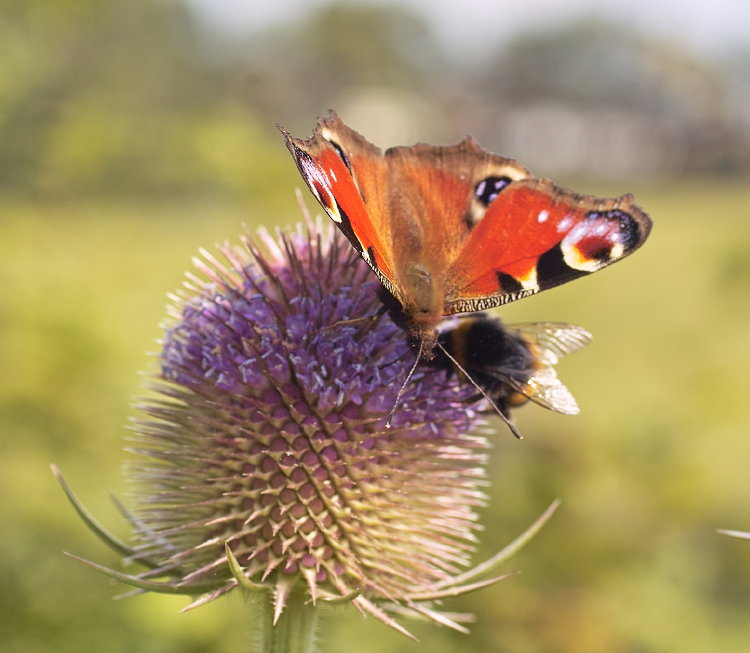
Many thistles and these Fuller’s teasels which we grow in a wilder part of the garden are extremely valuable nectar sources for butterflies and bumblebees 22/08/11.

The nodding goose neck flower heads of Lysimachia clethroides are some of the best we grow as insect nectar and pollen sources, for butterflies, bees, moths and bumblebees as well as huge numbers of flies later in the year 15/08/11.
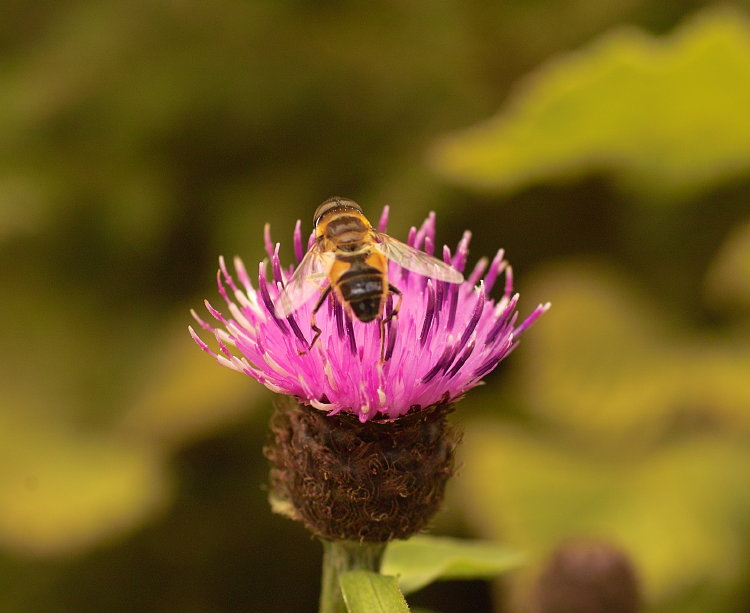
Common Knapweed, Centaurea nigra, is one of the native flowers which we like to grow in rougher areas since it has huge appeal to many bees, flies, bumblebees and butterflies, as well as being a gorgeously coloured flower. 8/08/11.
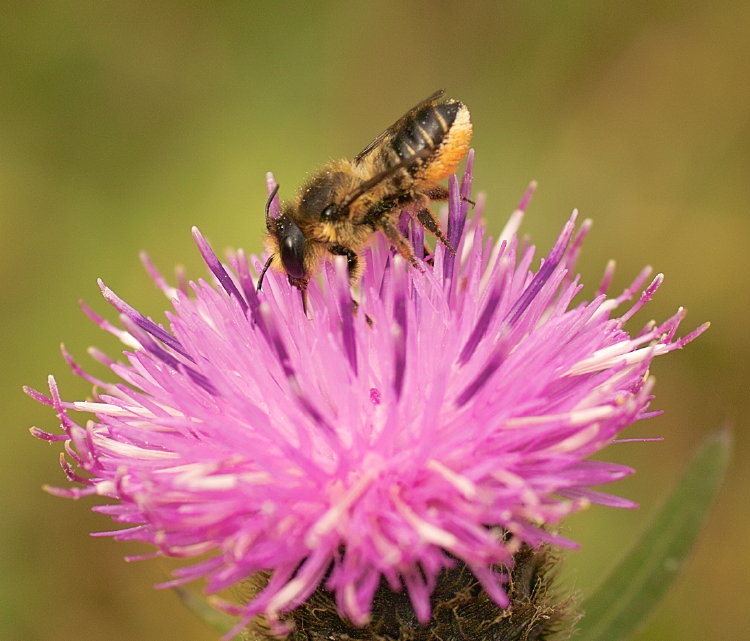
Solitary bee on Knapweed flower 18/08/11.
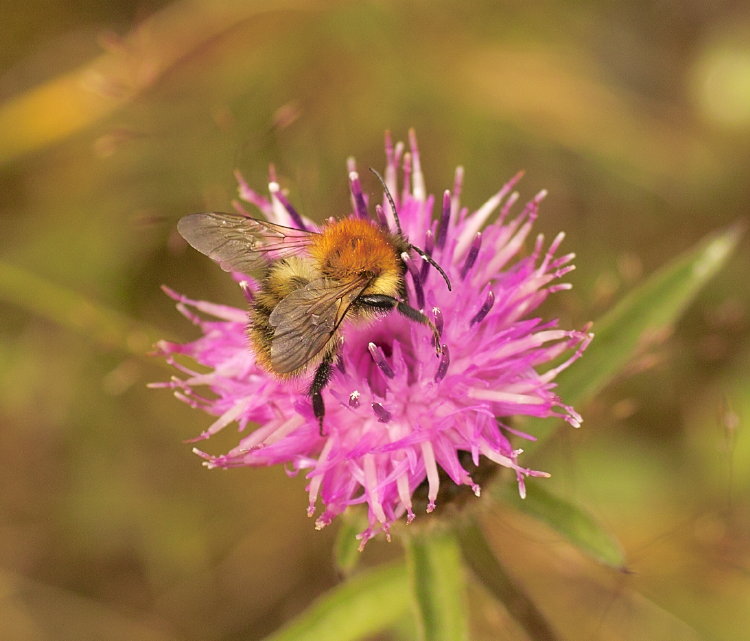
Bumblebee on Knapweed flower 18/08/11.
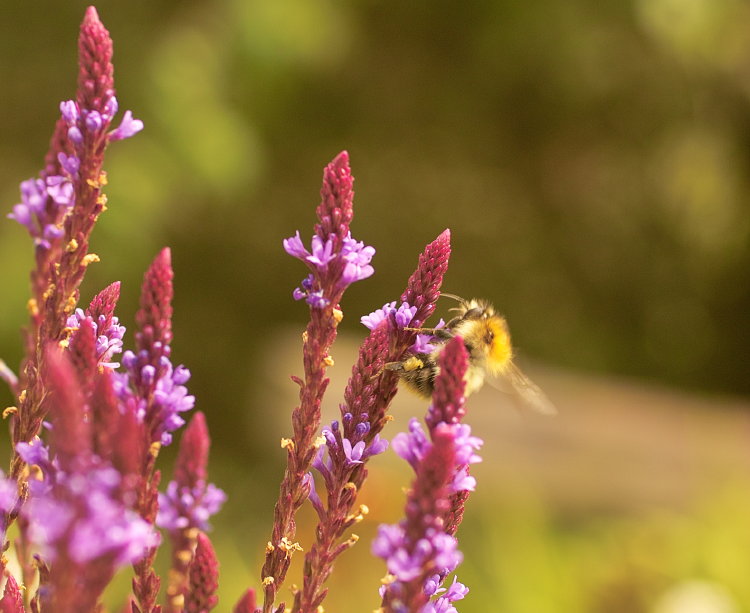
Verbena hastata is a Verbena which is attractive to many late-season bumblebees, flies and butterflies, and slightly taller than Verbena rigida mentioned below 14/08/11.

We grow a lot of self-seeded golden and green marjoram, which attracts huge numbers of butterflies, bumblebees, native mining bees, honey bees and flies. It’s a good plant to grow amongst Buddleia to add to the insect appeal of an area. Speckled Wood, Pararge aegeria butterfly 15/08/11.
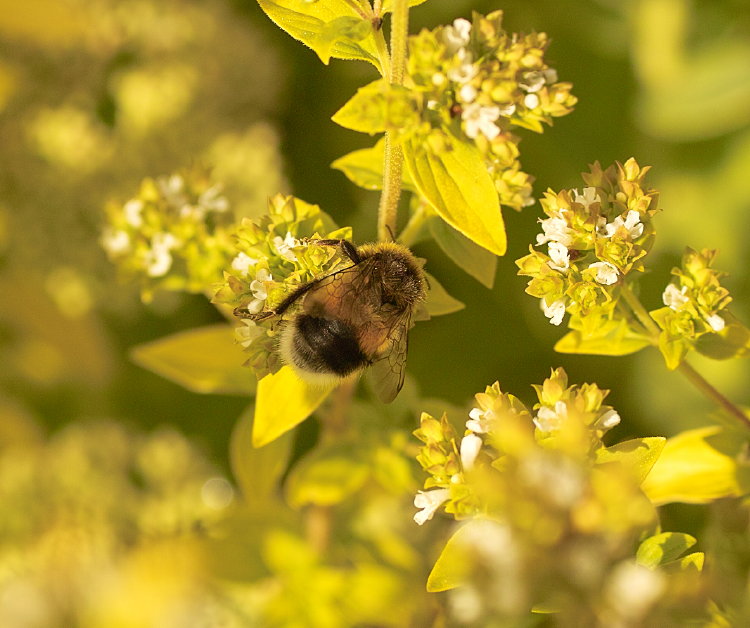
Bumblebee on Golden Marjoram 15/08/11.
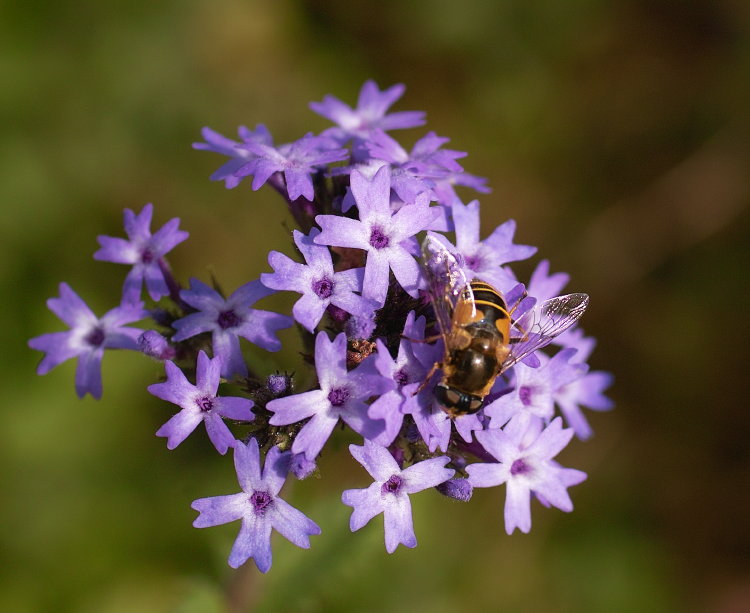
We love the flowers of Verbena rigida, and the plant’s form, creeping amongst other plants and sending up these 18-inch flower spikes for several weeks. The flowers are attractive to flies, butterflies, bumblebees and moths, and we find that it is more reliable and hardy here than the more widely grown V. bonariensis.
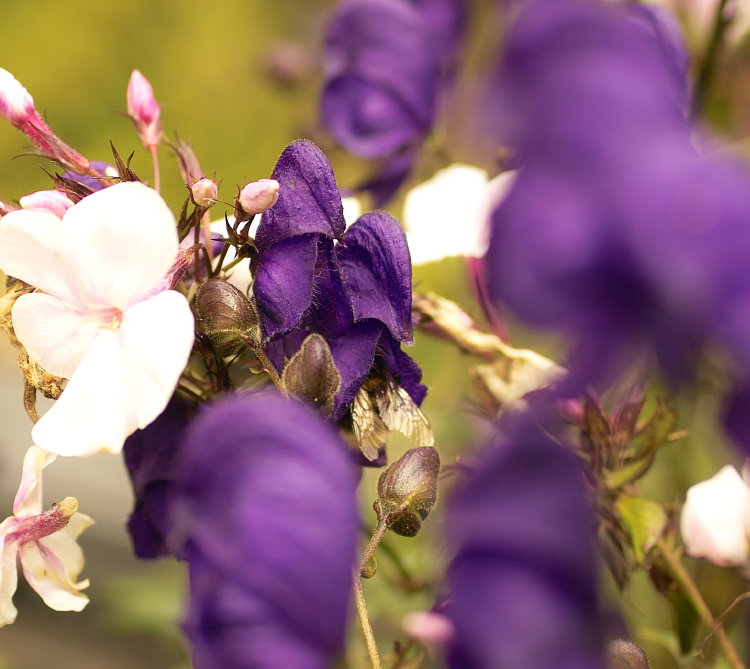
Whilst most parts of the Monkshood, Aconitum, are very toxic, some larger bumblebees seem to value it highly as a nectar source 4/08/11.

White and blue borage, Borago officinalis, are stunning self-seeded annuals we currently encourage to flower, as they look great, can be used in the kitchen and are magnets for many honey bee, solitary bee and bumblebee species 4/08/11.
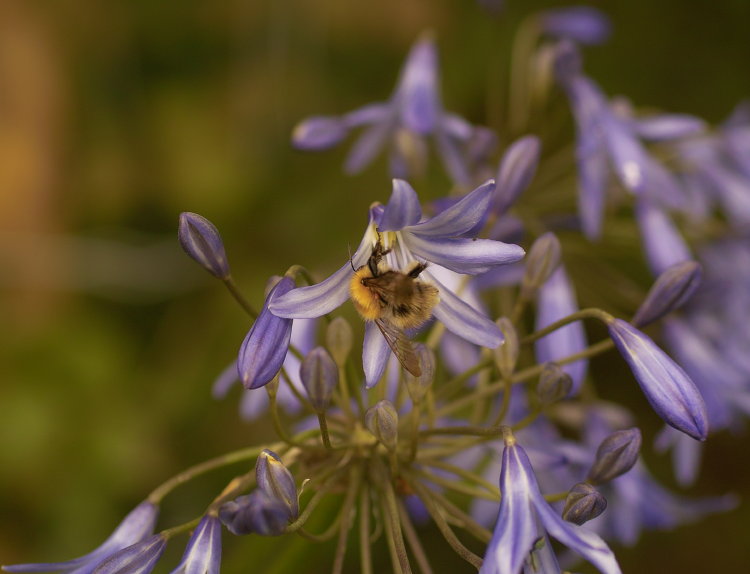
The flowers of Agapanthus continue to attract bumblebees, some solitary bees, and flies, but never, it seems, honey bees, as they flower through to the end of the month 4/08/11 …
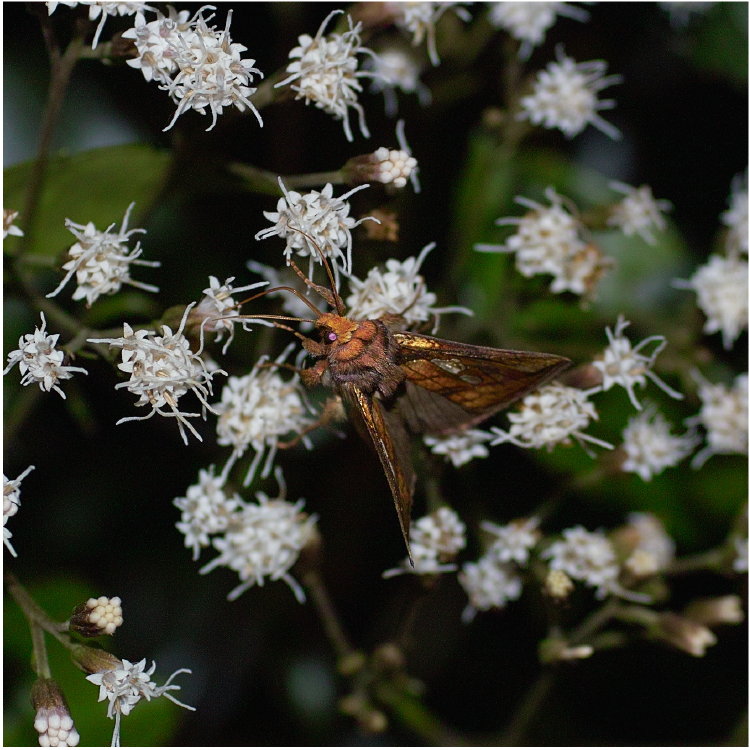
The small white clusters of Ageratina ligustrina are popular with many moths and flies. A tender shrub from Mexico, it’s one of the few plants which we cosset, having kept it going with 3 self-sown seedlings after the mother plant died. So we grow a few in pots and overwinter them in the greenhouse. Sadly another plant no longer grows up here.

Veronicastrum virginicum f. album although flowering for a short period, is regularly visited by moths, and some smaller bumblebee species, as well as honey bees.
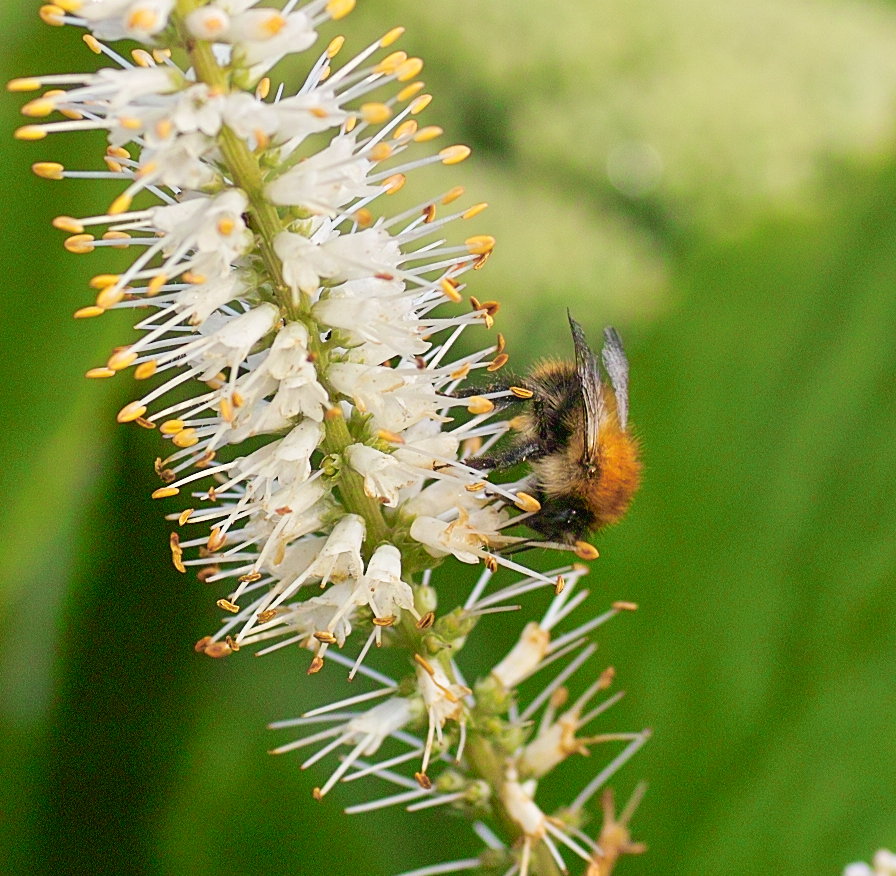
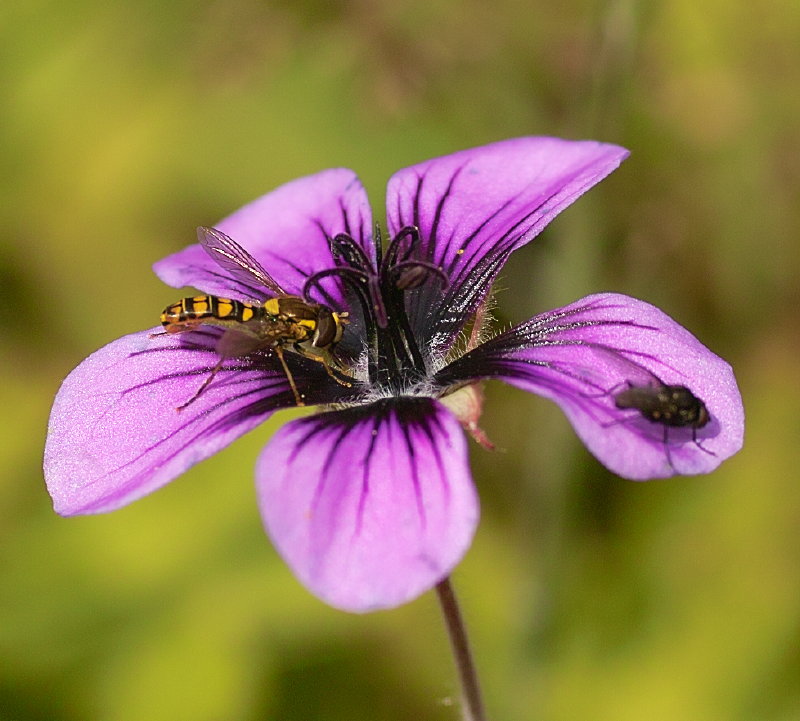
Continuing to flower from late July to early August, Geranium procurrens is a vigorous spreading plant for a poor sunny spot which attracts many flies, butterflies, bumblebees, (but no moths, since the flowers close at night), and honey bees.
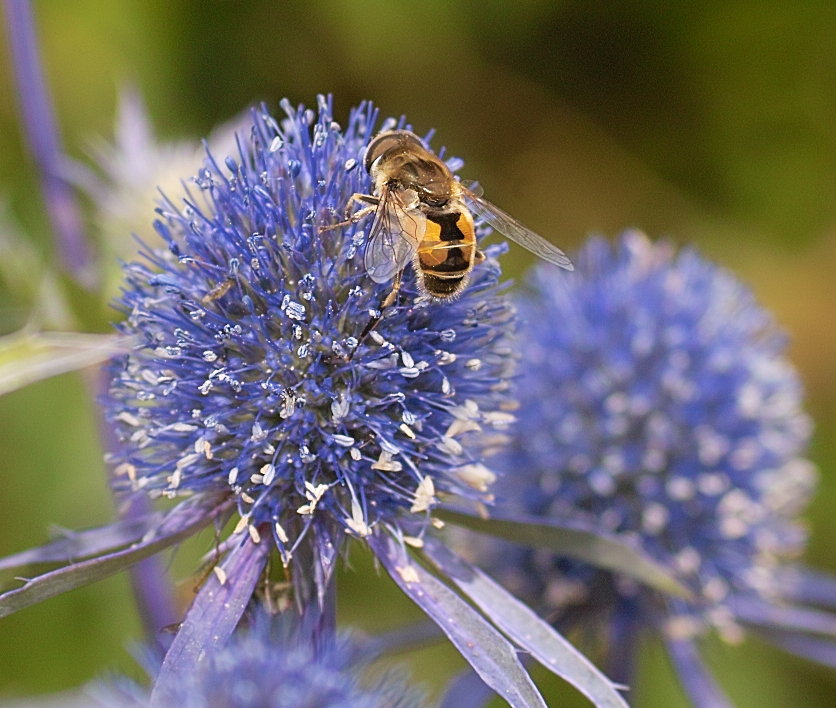
Eryngium alpinum is another perennial flower with a consistent and diverse insect appeal for flies, butterflies, bumblebees, and honey bees.
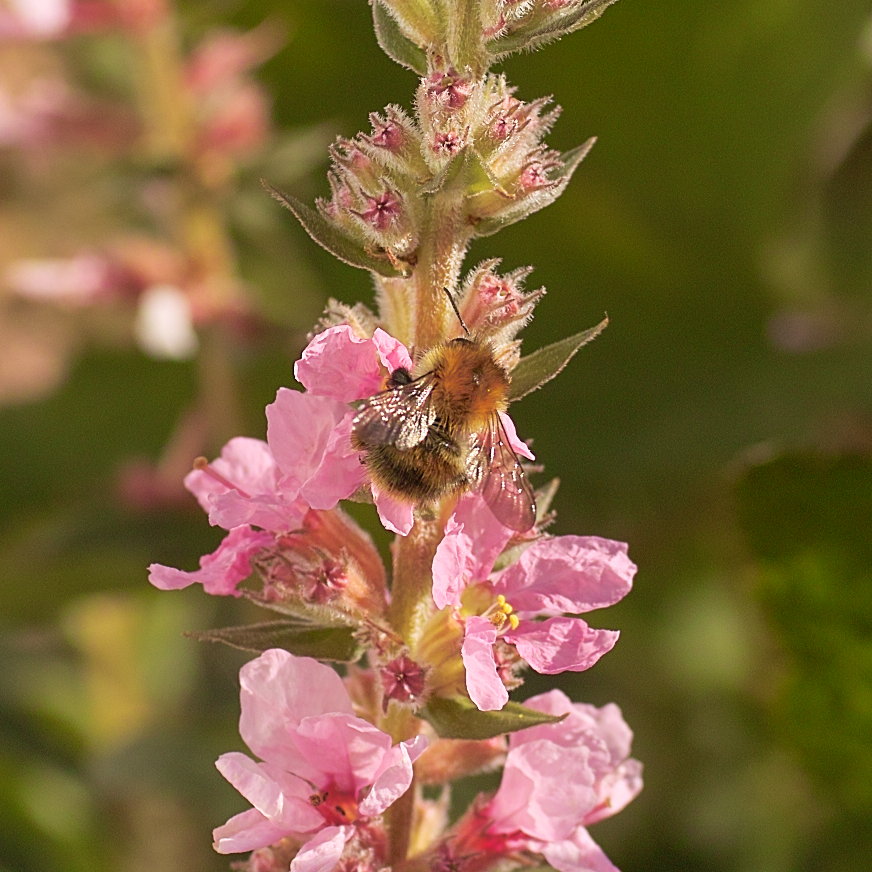
A lovely variant of the native Purple Loosestrife, Lythrum salicaria ‘Robert’, looks good and had a few bumblebee visits in 2012.
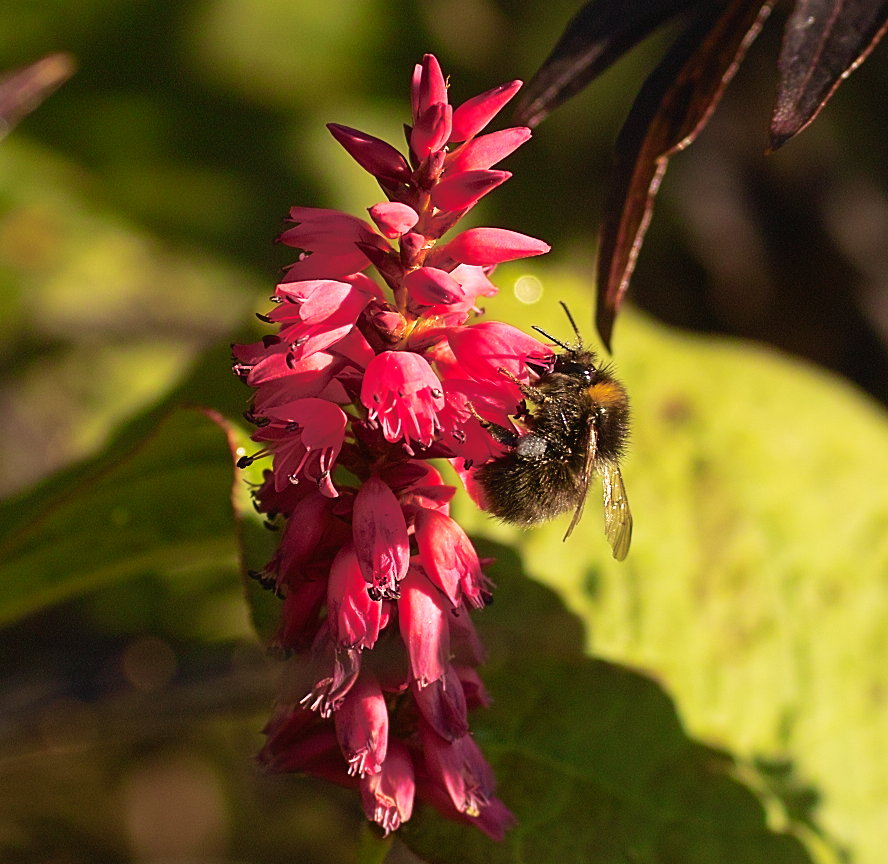
Whereas the rich-coloured flowers of Persicaria amplexicaulis var. pendula were a huge magnet for smaller bumblebees as soon as the sun rose, as well as honey bees. The flowers looked great next to a black leaved elder, Sambuccus nigra ‘Black Lace’, a serendipitous planting association, we feel lucky to have made.
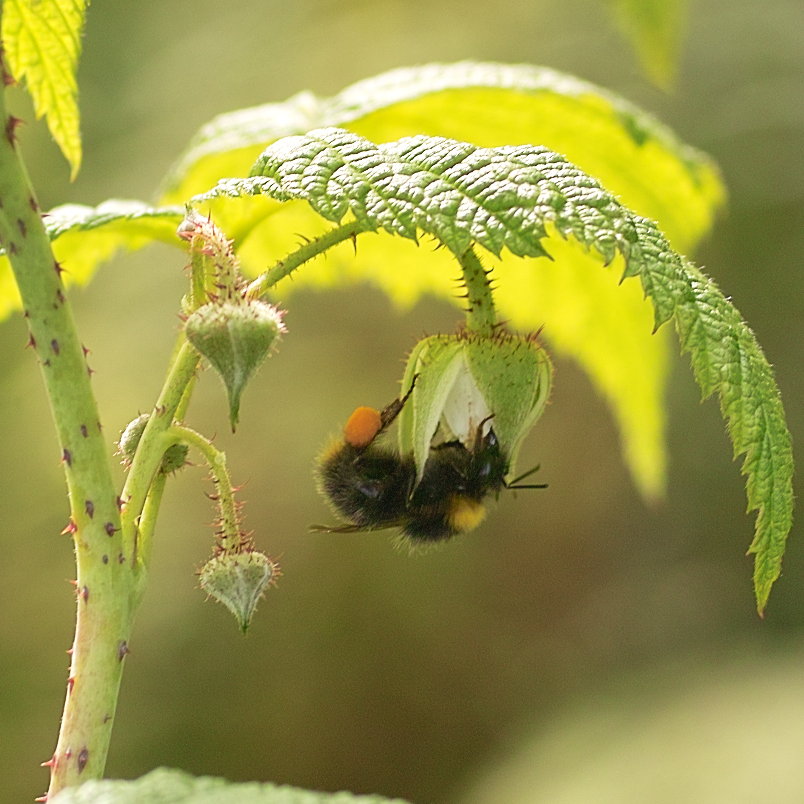
The pollination of our autumn fruiting raspberries, ‘Autumn Bliss’, seems to depend on the work of 2 smaller bumblebee species, as well as wasps.
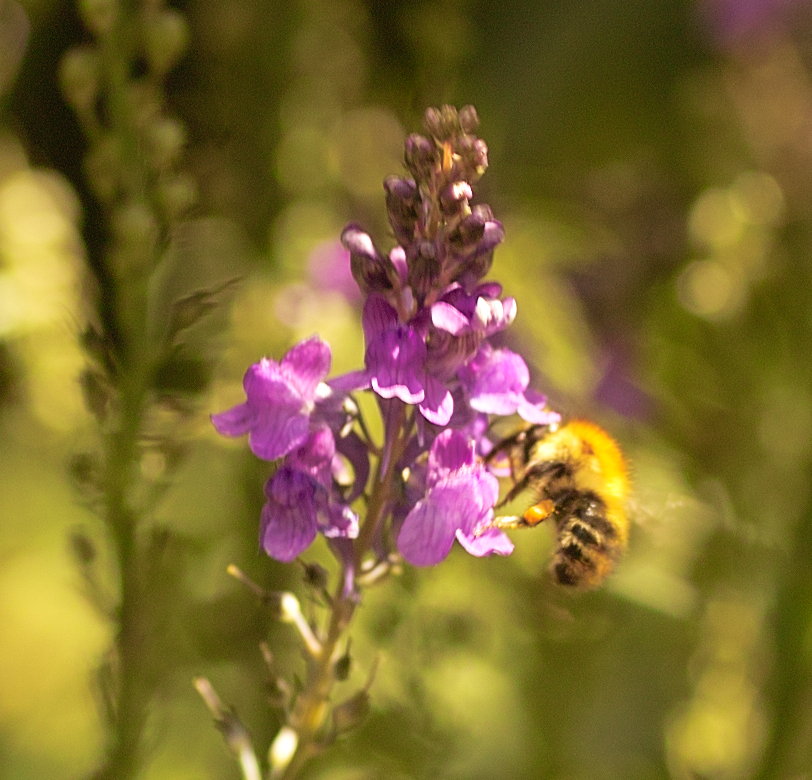
A blurry windy shot shows that native Linaria purpurea continued to attract many bumblebee and honey bee visits into August.
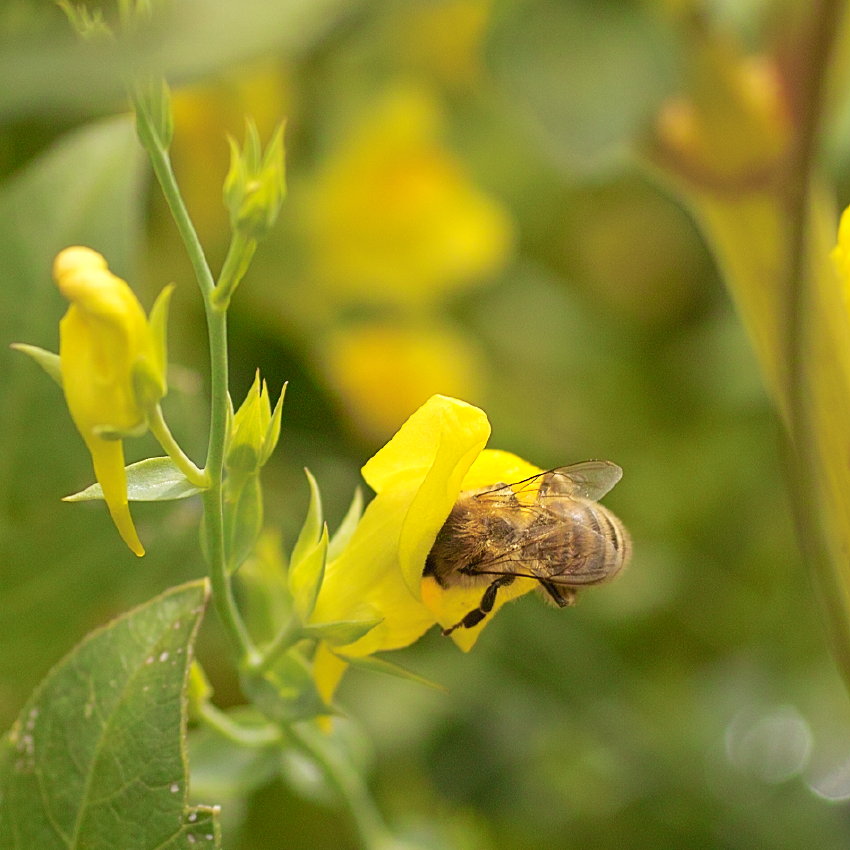
Whereas the much more floriferous L. genistifolia had only occasional visits, this being the only honey bee seen on its flowers all summer.
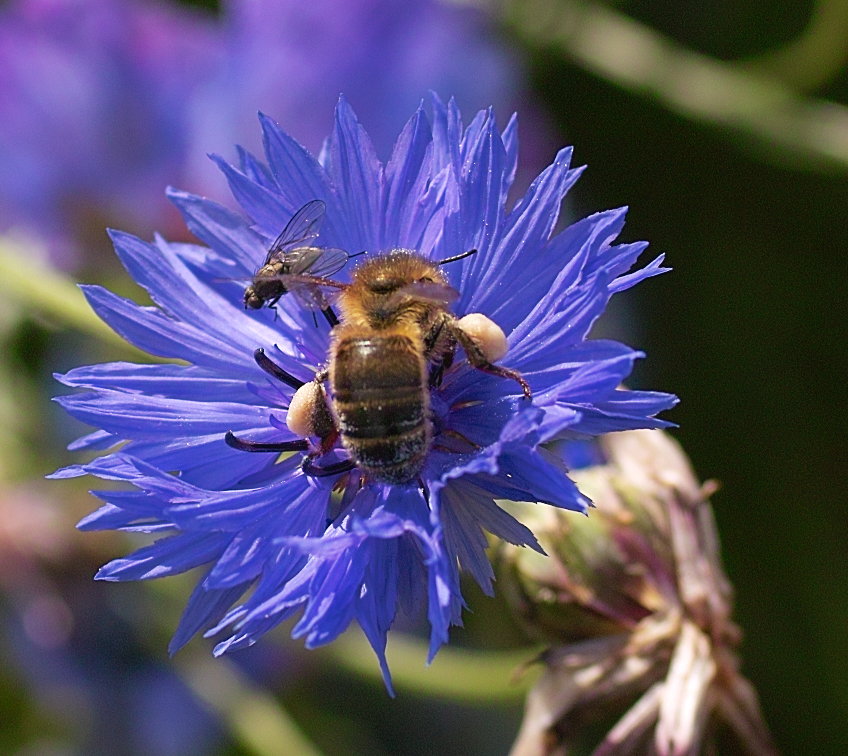
The annual native Cornflower, Centaurea cyanus, which we grew in 2012 for the first time looks gorgeous and attracts many insect visits from honey bees, bumblebees, flies and butterflies.
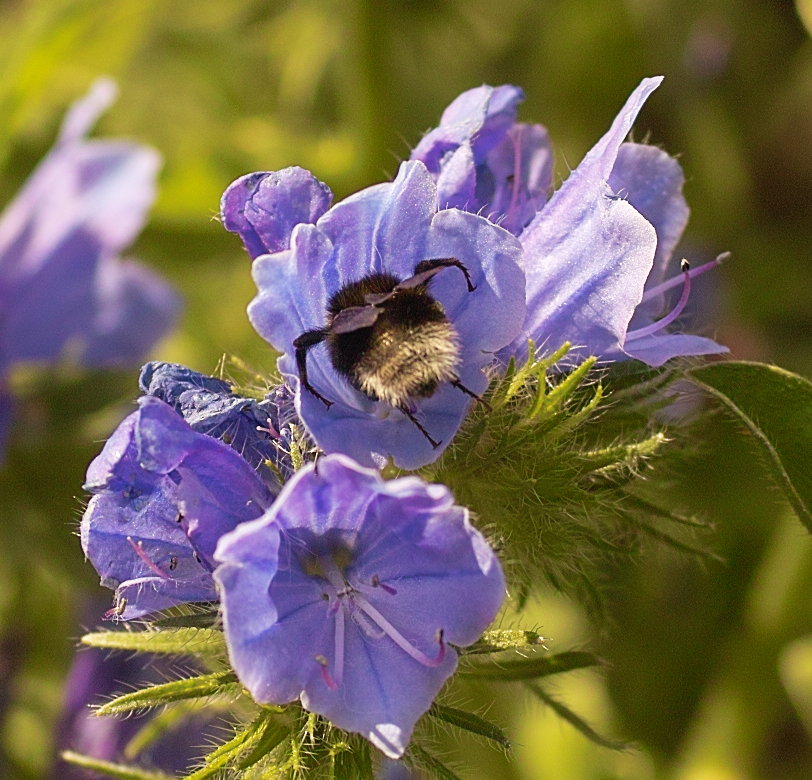
The other new annual for us which is just as popular with flies, bumblebees and honey bees, and also looks a fabulous blue colour is Echium ‘Blue Bedder’. I’ve always shunned annuals in the past, because of the extra work involved over perennials, but both these last 2 plants have become firm favourites. (Although over time I’ve reverted to my dislike of the fag of annual plants!)
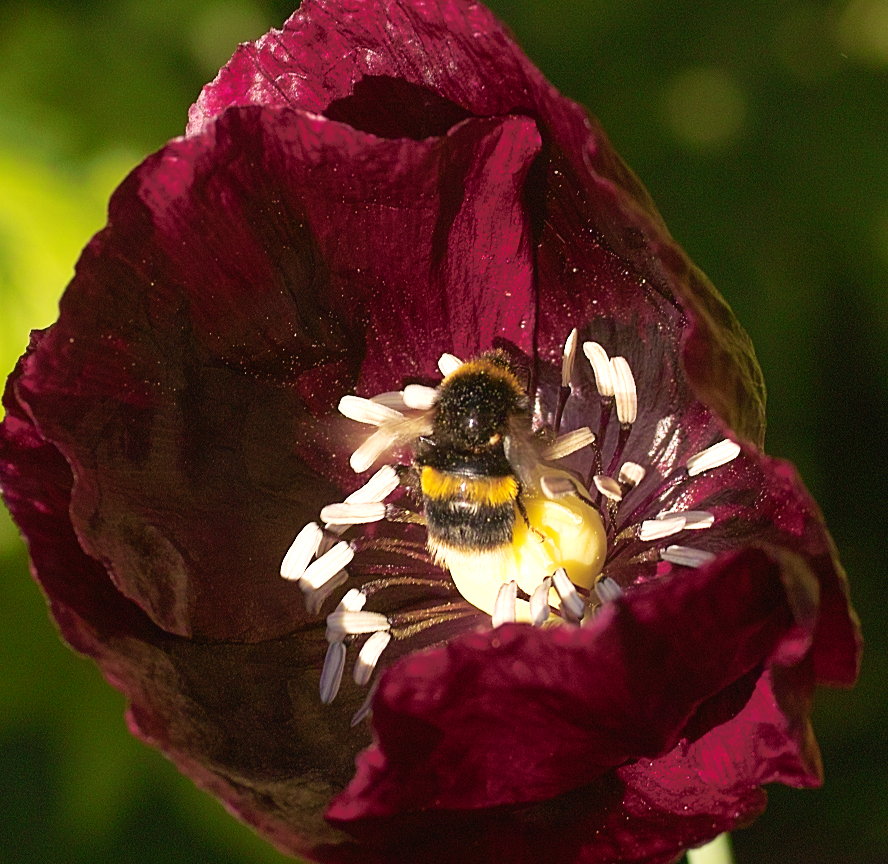
This gifted annual Opium poppy (Thanks to Jane and Ivor!), is another stunning honey bee-attracting flower, although as with all poppies, it doesn’t produce any nectar, apparently. The image doesn’t quite capture the darkness of the petal colour, and some of the plants are blowsily double, but the single forms attract small bumblebees which buzz pollinate the flowers, and it’s my sort of blending in colour for this time of the year. The seed will be scattered widely next year, to see where it will pop up.
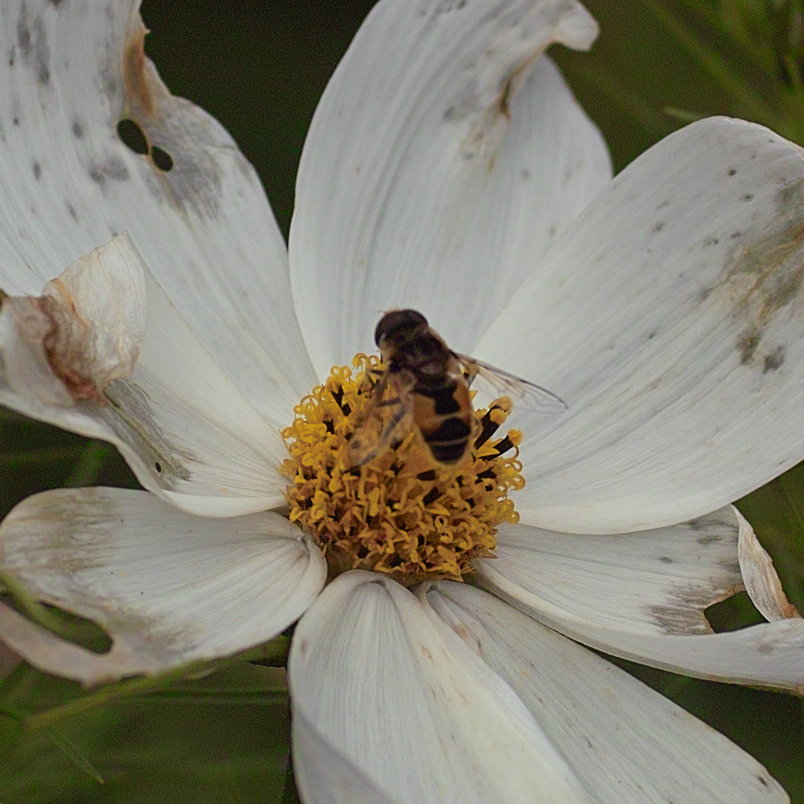
Cosmos ‘Purity’ really didn’t have a fair trial in 2012, since the weather, slugs and rabbits have all given the plants a pasting. But it is an attractive and insect friendly annual, so maybe I shall try again next year. ( Again another plant which sadly only occasionally gets sown).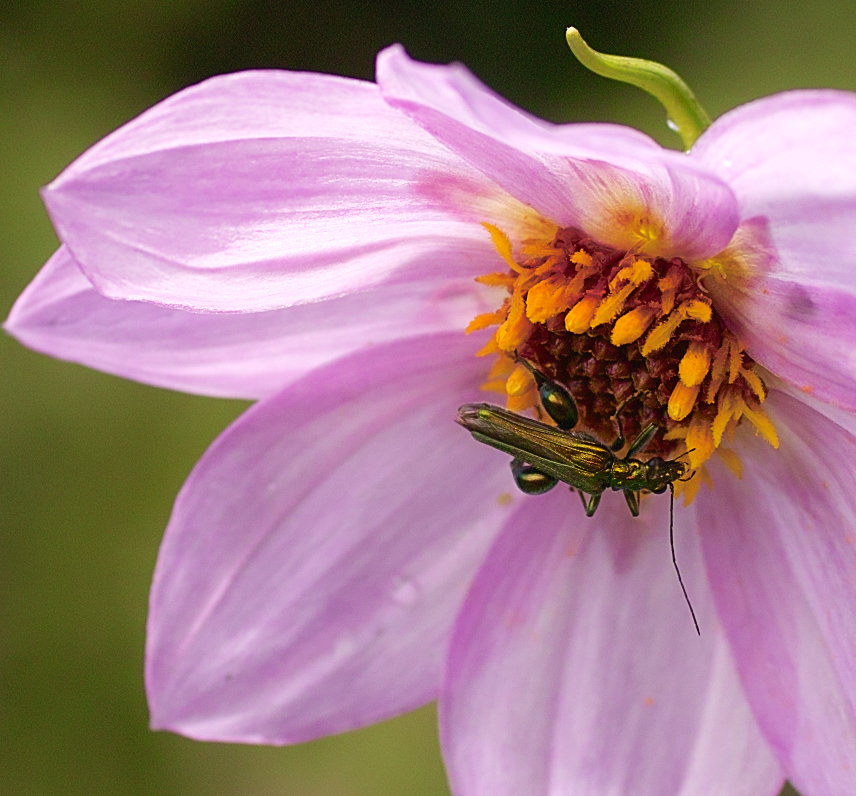
As you can see the first year (2012) of growing any Dahlia flowers has seen the pretty Dahlia merkii take a pasting from the rain, but it’s still attracted a few flies, beetles and small bumblebees. Ten years on from this and it remains a firm favourite in the garden, the only dahlia, indeed to have survived, and it can safely be left over winter in the ground up here.
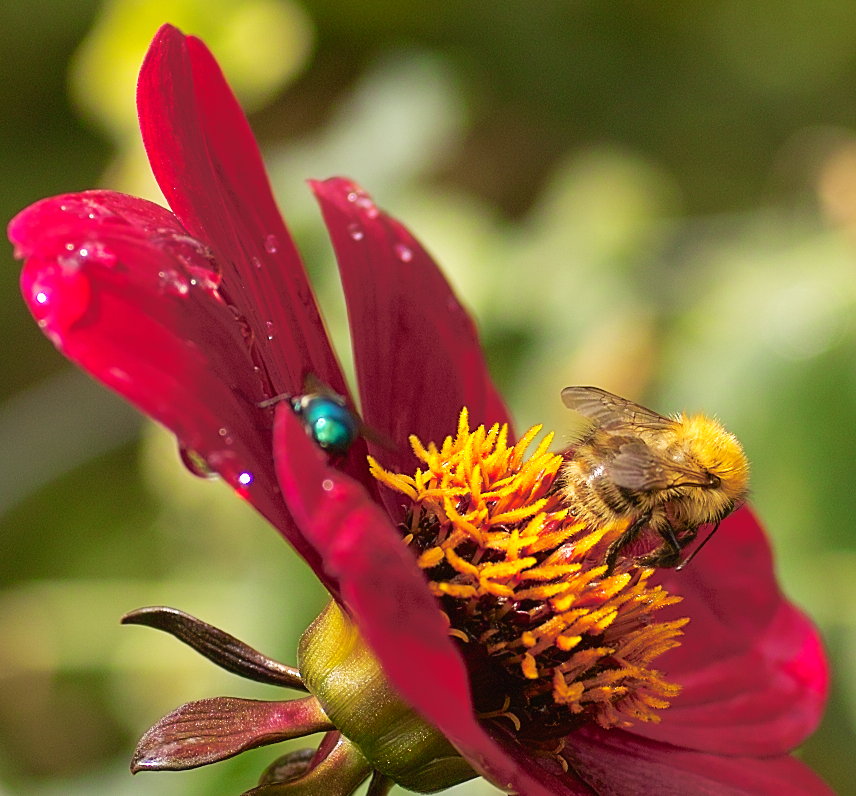
This is one of the other single Dahlia cultivars we’re trying. ‘Bishop of Auckland’, with stunning dark leaves. Very popular with flies, and bumblebees, but no Honeybee visits as yet.
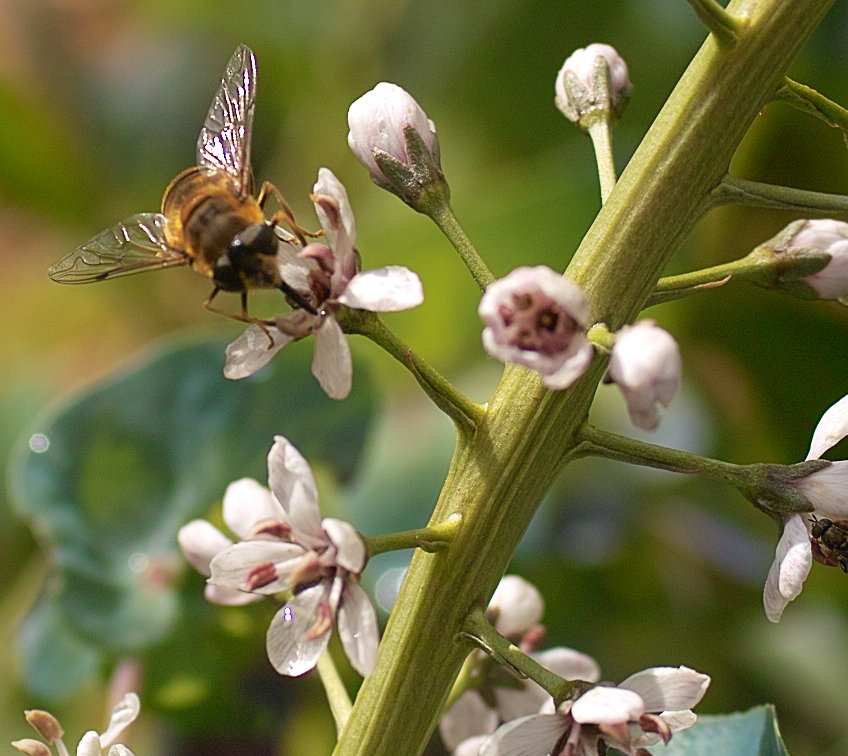
Another first season for Lysimachia ephemerum, one of several gift plants in 2012 from visiting gardeners. So far it’s not proved as appealing as L. clethroides, but this may simply be because the plant, for now, is too small. Another long-term reject/fatality, I’m afraid.
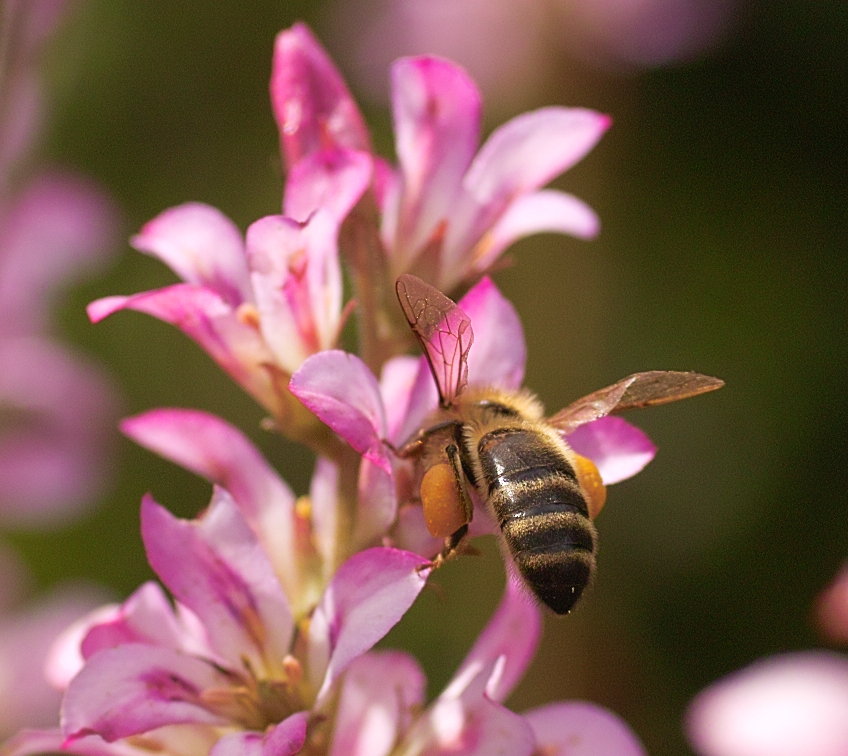
2012 has seen Francoa sonchifolia turn out to be a star insect flower, as well as being a beautiful sight with spikes of these pretty flowers over about 6 weeks. Honey bees, bumblebees, flies and even a daytime moth have all nectared or collected its bright orange pollen.

Bumblebee on Francoa sonchifolia flowers.
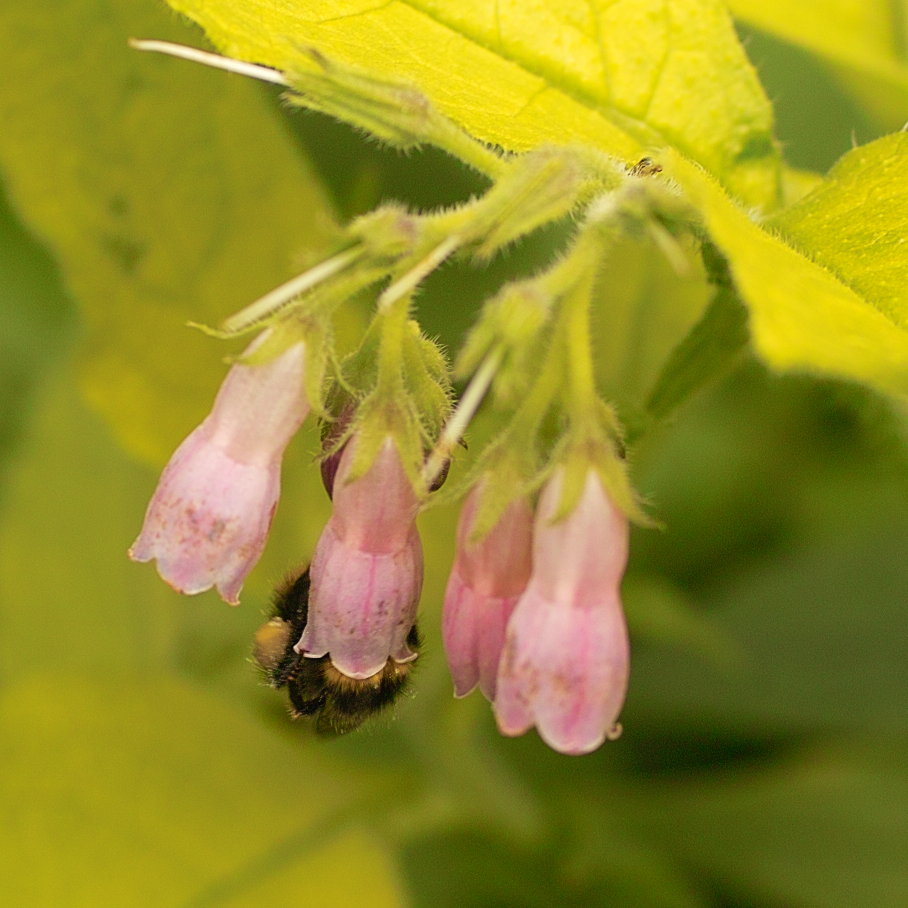
Our Golden Comfrey, Symphytum ibericum ‘All Gold’, another member of the borage family, continues to flower into August attracting particularly smaller bumblebee species.
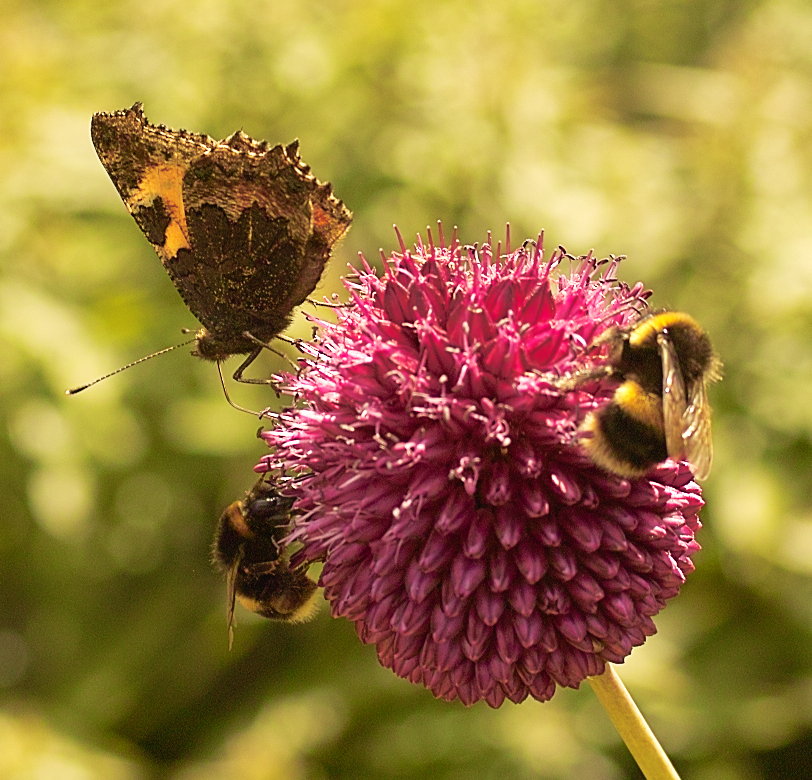
How’s that for insect appeal? We struggle to grow many Alliums up here. I think it’s the high rainfall, but we hope that we can develop a Gelli clone of this one, Allium sphaerocephalon. Only about half the bulbs planted last year have survived and flowered, but they’re hugely attractive to a wide range of flies, butterflies, bumblebees and honey bees. A star performer, and of course about the cheapest Allium you can buy, as well as having a gorgeous rich colour. (10 years on and we have a tiny surviving, and bulking up population. Maybe these will gradually spread via scattered seeds?)
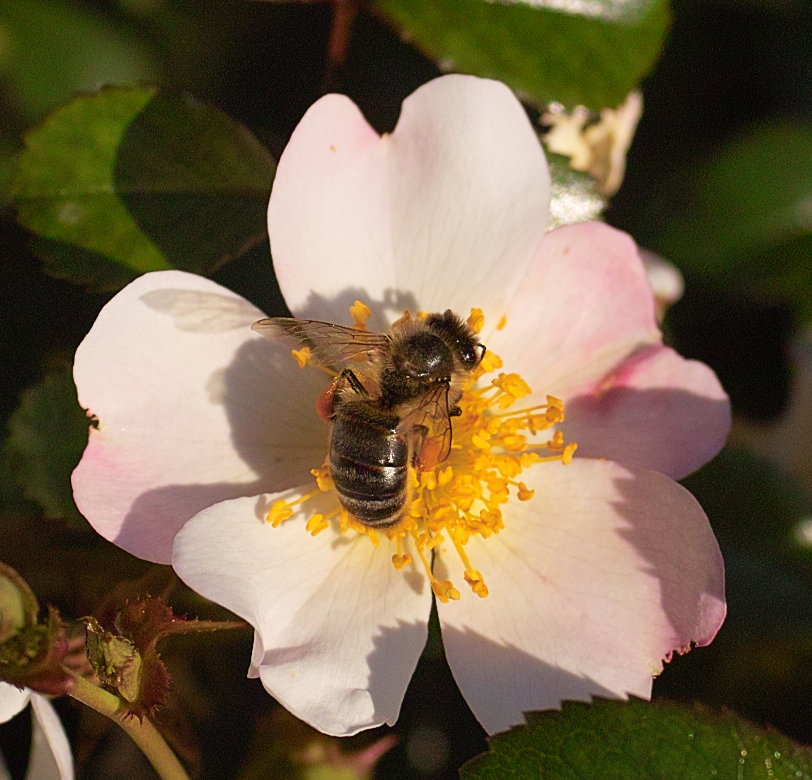
2 roses which are really worth growing for insect appeal. Rosa ‘Grouse’ has exceeded expectations in its first year, growing over a lowish wall and attracting flies, bumblebees and honey bees in profusion, and also has a strong and differently pleasant aromatic scent.

And our ever reliable Rosa rugosa cultivar, R. ‘Frau Dagmar Hartopp’, which flowers continuously from May, until frosts, and is still attracting both bumblebees which buzz the flowers for pollen, flies and honey bees.
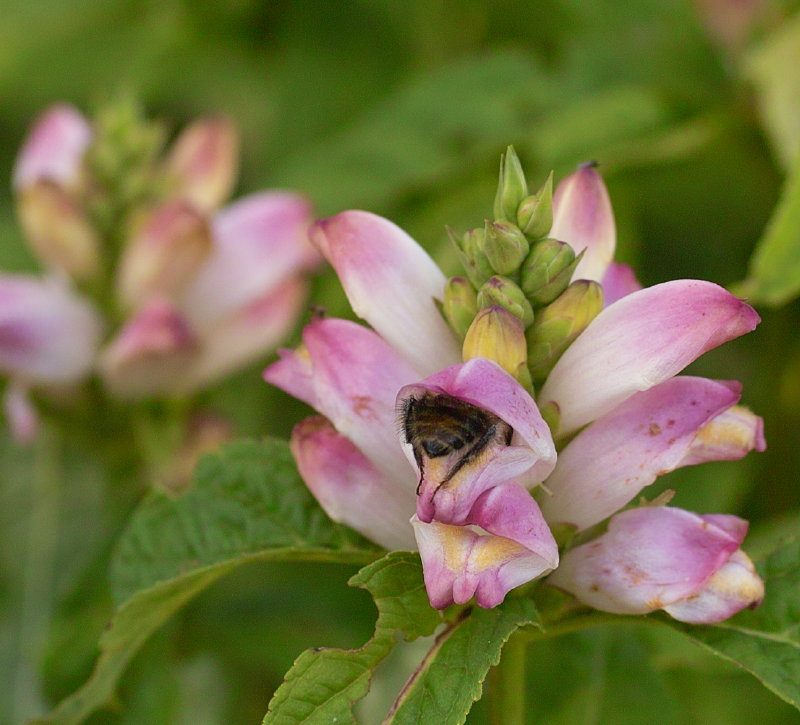
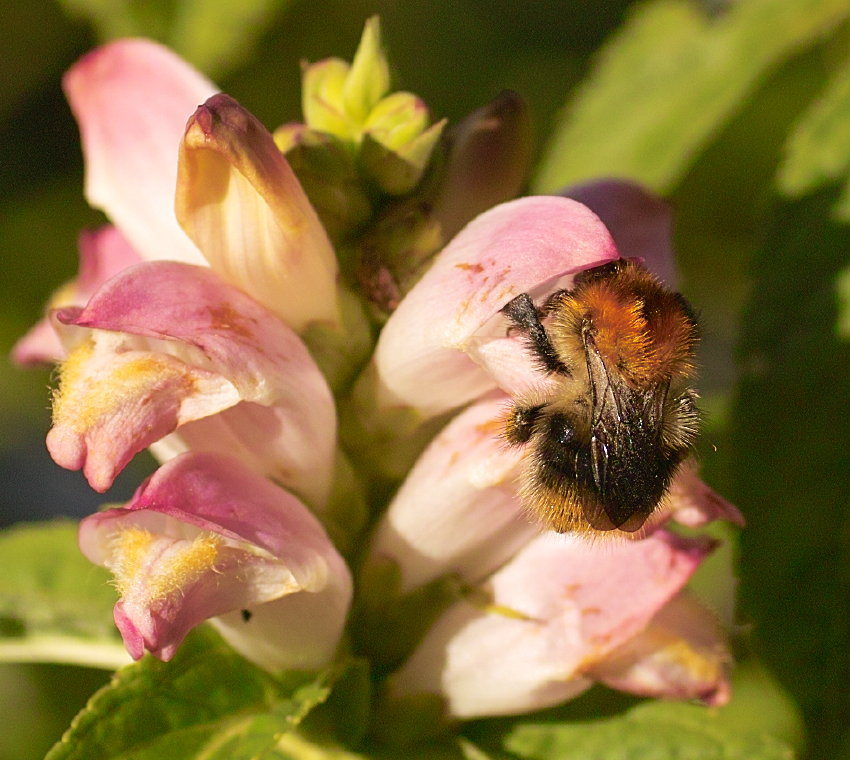
Chelone glabra doesn’t flower for a long period but combines well with the season and colours of many Hydrangea cultivars. The flowers are very popular with this bumblebee species (above and below), whilst honey bees visit the adjacent Hydrangea serrata.
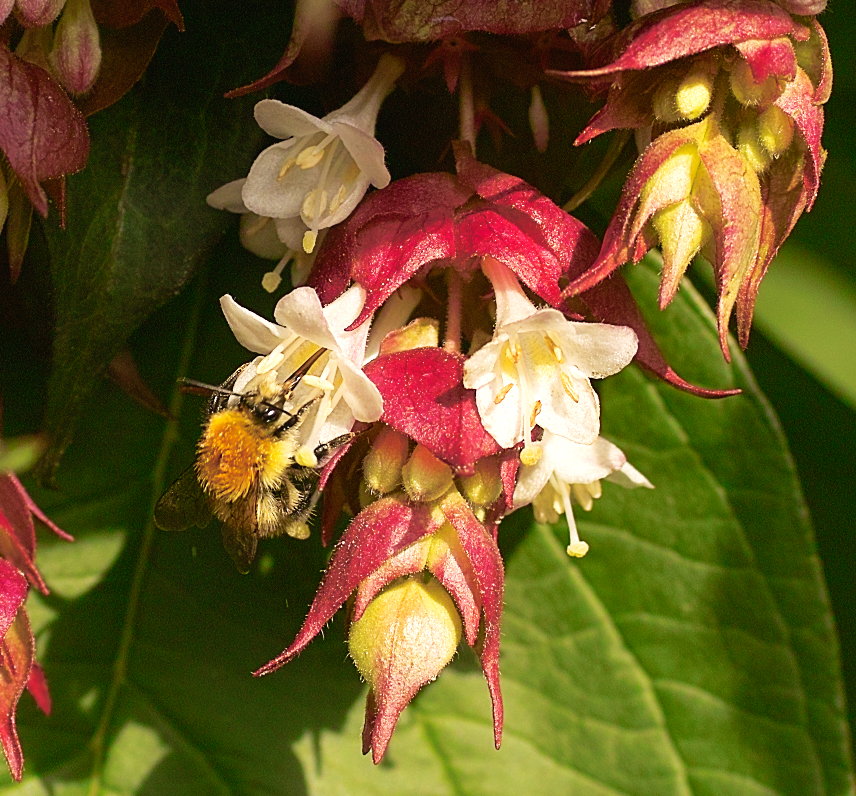
Leycesteria formosa, Himalayan honeysuckle, continues to produce masses of flowers through August and then reddish-purple berries. Several bumblebees visit the flowers, which are also visited after dark by several moth species, in part attracted by a sticky secretion produced around the fruits.
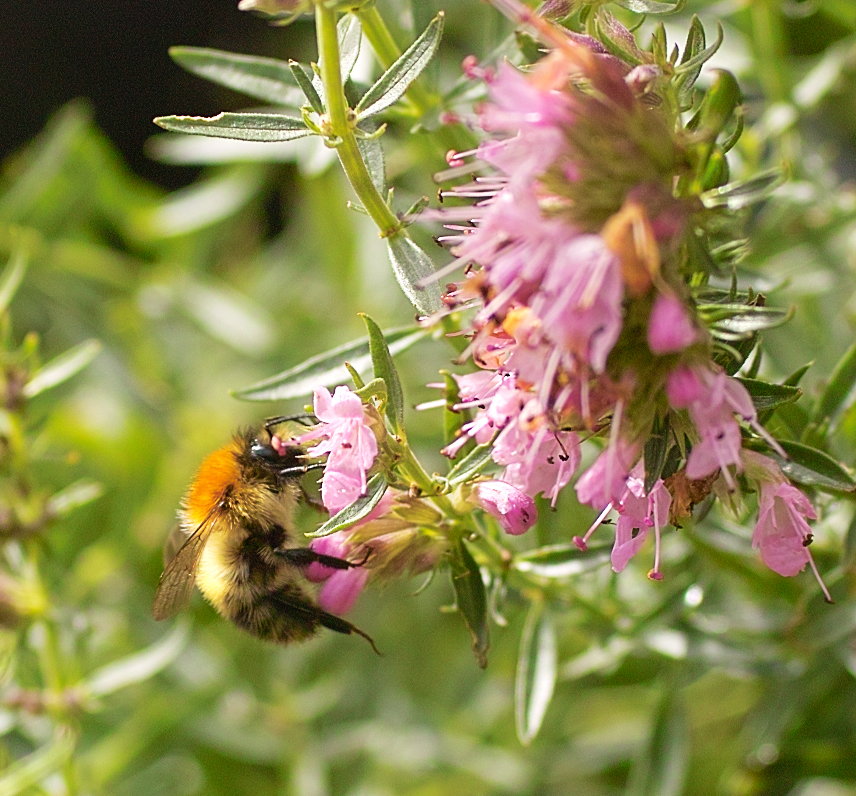
Hyssop officinalis f. roseus is visited by smaller bumblebee species.
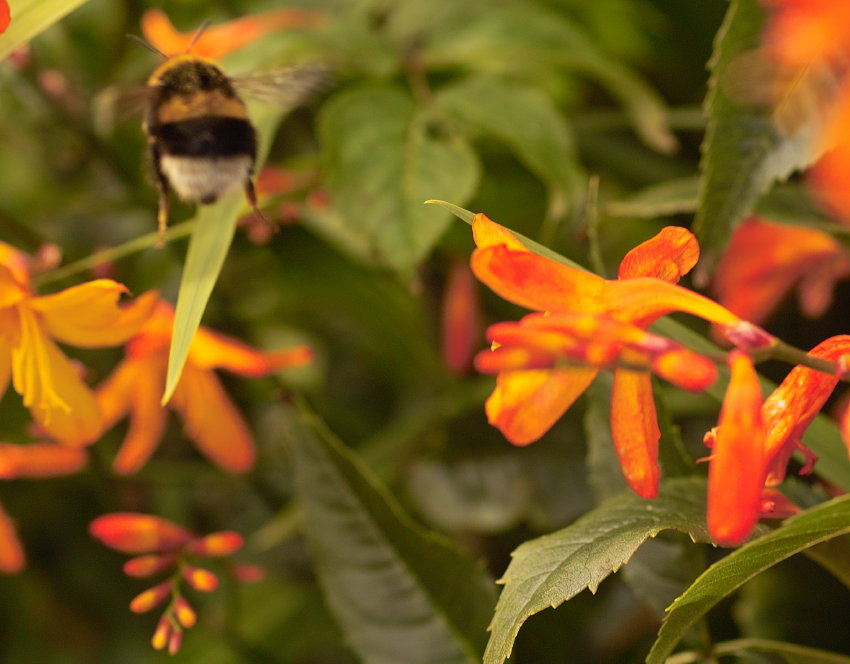
The common orange Crocosmia is also visited by larger bumblebee species.
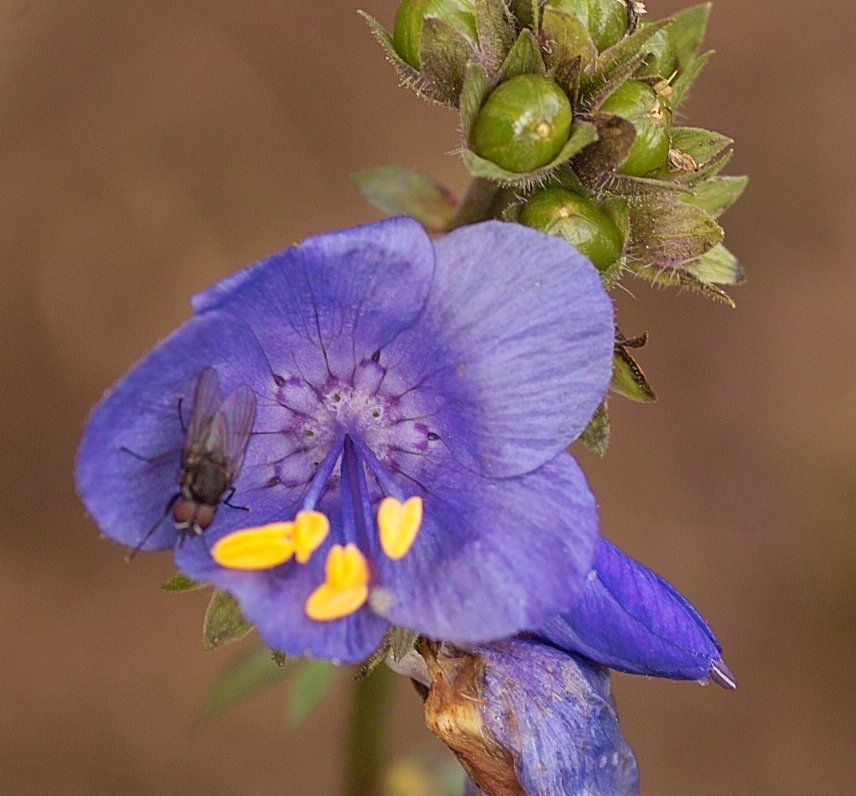
The purple-leaved form of Polemonium yesoense ‘Purple Rain’ (Jacob’s Ladder) was a sufficiently popular bumblebee attraction 2 years ago for me to bulk it up through seed propagation. Starting to flower in late June, it’s still going into late August in 2012. Unfortunately, I haven’t as yet got any good images of bumblebees nectaring, so this fly will have to suffice, until 2013. Sadly it proved to be another very short-lived plant up here.
Last updated 12/11/2013